What it costs to install an EV charger
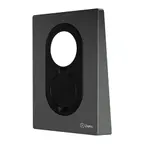
An 11 kW Zaptec Go costs SEK 11,096 installed, or SEK 5,548 with the Swedish tax reduction for green technology (grön teknik). The 22 kW Zaptec Go costs SEK 11,428, or SEK 5,714 with grön teknik. The price includes the EV charger (wallbox), installation, cable, commissioning and 25 per cent VAT. A travel charge of SEK 500 is added.
The prices apply to a standard installation in an accessible place, where the cable route can be used. If the consumer unit needs to be extended or the main fuse raised, those are separate jobs with their own prices. Describe where the charger is to go and where the consumer unit is, and we will tell you whether your installation fits within the fixed price.
The price with grön teknik is the price after the reduction, if you are entitled to it. The accessories are listed under fixed prices for EV chargers, and there is more about the price in the article what an EV charger costs with installation.
11 kW or 22 kW
The Swedish National Electrical Safety Board, Elsäkerhetsverket, writes that high charging power is often unnecessary: if the car can charge all night, lower power is enough for the daily driving of most households. The power is the number of phases times 230 V times the current. A phase is one of the three live conductors in a three-phase connection.
| Connection | Current | Charging power |
|---|---|---|
| Single-phase | 16 A | about 3.7 kW |
| Three-phase | 16 A | about 11 kW |
| Three-phase | 32 A | about 22 kW |
Charging at 11 kW therefore corresponds to a 16 A fuse on each phase. The main fuse, also called the meter fuse (mätarsäkring), decides how much electricity the house can use at once. If the house has a 20 A main fuse, there is, according to E.ON, very little power left for anything else while the car is charging.
For 22 kW you need 32 A on each phase, and the main fuse then has to be larger than that for the house to work at the same time. A larger main fuse means a higher fixed grid fee. Also check what the car’s on-board charger can take, because the wallbox cannot charge faster than the car can handle. There is more about the fuse on the page about meter cabinets and the main fuse.
Load balancing
Load balancing makes the charger lower the charging power when the house is using a lot of electricity, so that the main fuse does not trip. Equipment at the electricity meter measures the load of the house and tells the charger how much is left.
The benefit is that you can charge on the main fuse you already have. E.ON writes that anyone who uses load balancing does not always need a larger meter fuse in order to get a charger. Load balancing does not, however, lower the grid fee in itself. Neither E.ON, Kraftringen nor Öresundskraft has a capacity charge (effektavgift) for households today.
For the Zaptec Go, the load balancing unit is called Zaptec Sense. It costs SEK 928 or SEK 948 depending on which port the electricity meter has, and SEK 464 or SEK 474 with grön teknik. There is more in the article on load balancing.
What the electrical installation needs
A charger puts a heavy load on the installation for many hours, and the installation has to be sized for that. Three things are worth knowing:
- Its own residual current device (RCD) of the right type. An RCD cuts the power when current leaks to earth. The charger must not be connected under the house’s existing RCD. Its own RCD can be built into the charger.
- Its own cable from the consumer unit. SEK Svensk Elstandard advises a separate final circuit, because it reduces the risk of overload and the number of joints.
- A registered electrical installation company (elinstallationsföretag). According to Elsäkerhetsverket’s page on installing a charge point, the company must be registered for the activity type “Övriga anläggningar för användning av el” (other installations for the use of electricity).
LVJ Elinstallationer AB is registered for that activity type, and you can check this in Elsäkerhetsverket’s register search Kolla elföretaget (“check the electrical company”). If there is no free space in the consumer unit, it needs to be extended or replaced. That is not included in the price of the charger, and is described on the page about replacing the consumer unit.
Pre-notification to the grid operator
Whether the charger needs a pre-notification (föranmälan) depends on which grid operator (elnätsföretag) you have, and the answers differ across Skåne. The grid operator is the company that owns the local grid, not the company you buy electricity from. A pre-notification is a notice to the grid operator before the work is done.
| Grid operator | Examples of places | What they say about chargers |
|---|---|---|
| E.ON Energidistribution | Malmö, Burlöv, Svedala, Vellinge | No pre-notification as long as the electrical installation is otherwise unchanged |
| Kraftringen Nät | The town of Lund, Lomma, Bjärred | No pre-notification required at present |
| Staffanstorps Energi | The town of Staffanstorp | Charging equipment must be pre-notified |
| Öresundskraft | Helsingborg | A permanently connected charger must be pre-notified before the work starts |
If the main fuse is to be raised, a notification is always required. We check what applies with your grid operator and file the notification when it is required. Which company you have is shown on the bill from your grid operator. The background is in the article does the charger need a pre-notification.
The green technology reduction for EV chargers
In 2026 the green technology reduction gives 50 per cent of the cost of labour and materials when you install a charger, up to SEK 50,000 per person per year. The reduction is made directly on the invoice, and we help with the application.
The conditions for the reduction are that:
- you own your home, as a house (detached, semi-detached or terraced), an owner-occupied flat (ägarlägenhet) or a tenant-owner flat (bostadsrätt)
- the charger is used only by your household
- payment is made electronically
- the company is approved for F-tax (F-skatt), as LVJ Elinstallationer AB is, which means the company pays its own tax and social security contributions
- you have paid enough tax during the year to be able to use the whole reduction.
The Swedish ROT tax deduction for labour on your home (ROT-avdrag) and the green technology reduction are not given for the same work. If the consumer unit needs to be replaced or extended ahead of the charger, that part does not qualify for grön teknik, but it can qualify for the ROT deduction. The conditions are set out in the article on the green technology reduction for EV chargers.
Tenant-owner associations and businesses
Grön teknik does not apply to businesses, rented flats or an association’s shared parking. Tenant-owner associations (bostadsrättsförening) and businesses can instead apply for the grant Ladda bilen (“charge the car”) from the Swedish Environmental Protection Agency, Naturvårdsverket: up to 50 per cent of the cost, at most SEK 15,000 per charge point. The grant is given as long as funding is available and only covers new charge points. Businesses must apply before the work starts.
Our registration with Elsäkerhetsverket covers charging stations in all types of electrical installation. Association boards will find more in the article on charging spaces in a tenant-owner association, and businesses on the page for businesses and properties.
Charging from an ordinary socket
Elsäkerhetsverket advises against regularly charging an electric car (EV) from an ordinary socket and recommends a charger. Sockets are not made for a high load over a long time, and a loose connection in sockets, boxes or the consumer unit can cause overheating. This is advice, not a ban. For private charging at up to 16 A there is no requirement to have a charger.
There is more about the risks in the article can you charge an electric car from an ordinary socket. We are based in Malmö and install in Malmö and the rest of Skåne, for example EV chargers in Malmö and EV chargers in Lund.
Sources
- Elsäkerhetsverket – Charging stations (in Swedish)
- Elsäkerhetsverket – Installing your charge point (in Swedish)
- Elsäkerhetsverket – Planning your charge point (in Swedish)
- Skatteverket – Tax reduction for green technology (in Swedish)
- Skatteverket – Eligible work, green technology (in Swedish)
- Naturvårdsverket – Ladda bilen, “charge the car” (in Swedish)
- E.ON Energidistribution – Installing an EV charger (in Swedish)
- Kraftringen Nät – Pre-notification and completion notice (in Swedish)
- Öresundskraft – EV charger (in Swedish)
- Staffanstorps Energi – For electrical installers (in Swedish)
- SEK Svensk Elstandard – Electric car charging (in Swedish)