When the house needs rewiring
A house does not need rewiring just because it is old. The Swedish National Electrical Safety Board, Elsäkerhetsverket, writes that an electrical installation must meet the requirements that applied when it was installed, and that it does not have to be replaced because of its age. The same authority also writes that a detached house from 1950 probably has wiring and other equipment that ought to be replaced, and that houses built before 1970 stand out in the fire statistics.
These are signs that it is time:
- fuses that often trip
- sockets or wiring that are discoloured, cracked or smell of burning
- screw-in fuses that are too hot to touch
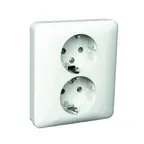
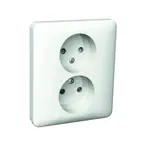
- unearthed sockets in rooms where you want earthed ones
- so few sockets that multi-way extension leads and extension leads have become permanent
- a renovation that opens up walls, floors and ceilings anyway.
The last point is often the best reason. When the walls are open, it costs the least to get the electrics right. Elsäkerhetsverket writes that it can be wise to have the electrical installation company (elinstallationsföretag) go through the whole installation in connection with a renovation. More signs are described in the guide to warning signs in your electrics.
What applies when you alter the installation
The basic rule is simple: the old may stay, the new must follow today’s rules. The regulations say that new provisions are to be applied to the alteration or extension, regardless of when the installation was first put into use.
| Part of the electrics | What applies when renovating |
|---|---|
| Wiring and sockets that are left untouched | May stay if they are in good condition |
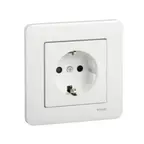
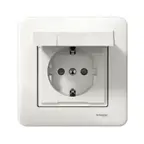
| New sockets | Must as a general rule be earthed. The requirement came on 1 January 1994, with a narrow exception for older rooms that have no earthed sockets at all |
| Earthed and unearthed in the same room | Must not be mixed. If you change to earthed, all the sockets in the room must be changed |
| Residual current device (RCD) | Must be in place for all circuits in bathrooms and for new sockets outdoors. Otherwise Elsäkerhetsverket always recommends adding one |
| New lighting outlets in ceilings (the plug-in outlet for a light fitting) | Made as DCL outlets, which may only be used in earthed rooms |
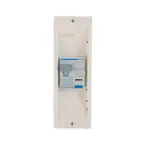
| The consumer unit | Does not have to be replaced, but new circuits need room |
An RCD cuts the power when current leaks to earth. A circuit is the sockets and lights that share one fuse.
You cannot do the electrical work yourself and have an electrician connect it or sign it off afterwards. You may replace an existing socket or an existing switch for no more than 16 A that sits in a box of its own, if you know how to do it. Moving them, putting up new ones or running new cable is electrical installation work. The limits are set out in the guide to what electrical work you may do yourself.
Electrics in the bathroom renovation
The bathroom is the room where the rules are strictest, and where the electrician needs to come in earliest. Every circuit that supplies the bathroom must be protected by a 30 mA RCD. The closer to the shower and bath, the higher the requirements for the equipment’s protection against moisture, what is called the IP rating.
- Underfloor heating. A starter package for 1 square metre with thermostat, sensor and commissioning costs SEK 5,988. Each additional square metre costs SEK 1,530. Underfloor heating at 230 V must be laid by a registered electrical installation company, and part of the inspection must be done before the floor is screeded.
- RCD for the underfloor heating. If the house’s RCD already protects the underfloor heating, that is enough, writes Elsäkerhetsverket. Otherwise the price list has a combined RCD and circuit breaker (RCBO) for underfloor heating for SEK 1,350. It is an RCD and a circuit breaker (a fuse that switches off and can be switched on again) in one unit.
- Sockets. A socket must sit at least 60 cm from the edge of the bath or 120 cm from the fixing point of the shower head. Never run an extension lead in from another room.
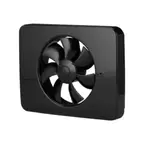
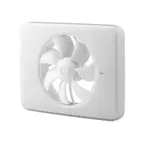
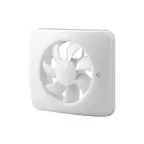
- Fan. Changing to a humidity-controlled Fresh Intellivent P costs SEK 3,904. A fan in a new position costs SEK 4,773 with up to 5 metres of cable. Drilling the hole is not included.
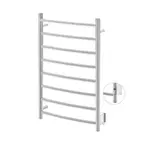
- Heated towel rail. Electrical connection with cable and fitting costs SEK 1,487. You may not connect a hard-wired heated towel rail yourself.
- Lighting. The right to change a light fitting yourself applies to dry rooms. In a bathroom an electrical installation company has to do it.
Measurements, zones and IP ratings are explained in the guide to electrics in bathrooms. If underfloor heating that is already in place is playing up, the guide to underfloor heating and thermostats will help.
Kitchen, laundry room and other rooms
In the kitchen the renovation is mostly about more sockets and separate circuits for whatever draws a lot of power. Elsäkerhetsverket mentions precisely a socket in the kitchen as an example of a change to the fixed installation, where a registered electrical installation company must always be used.
In kitchens from before 1994 the sockets by the worktop are earthed, while the dining area sometimes has unearthed ones. If you see both kinds in the same room you should contact an electrical installation company, according to Elsäkerhetsverket.
Some prices that usually come into it:
- A new flush-mounted double socket with up to 7 metres of cable costs SEK 1,720.
- Changing from an unearthed to an earthed socket, with new cable up to 10 metres, costs SEK 881 per socket.
- A flush-mounted Perilex socket for the cooker, three-phase and 16 A, costs SEK 3,695 with up to 10 metres of cable and a circuit breaker.
- Two sockets with lids for a washing machine and a tumble dryer cost SEK 2,694.
In the laundry room, electrical equipment that may be sprayed with water must be rated at least IPX4. All sockets, switches and lighting outlets are in the price list for sockets and on the page about electrical installation. How to plan the kitchen is covered in the guide to electrics in the kitchen, and the appliances in the guide to connecting a cooker, hob and white goods.
The order in which the electrics are done
The electrics are done in two rounds, one when the walls are open and one when the surfaces are finished. The important thing is that the electrician is involved before anything is closed up.
- Planning before demolition. Decide where sockets, switches and lights are to sit and what is to have a circuit of its own.
- Conduit, boxes and cable. Run while walls, floors and ceilings are open.
- Underfloor heating. Laid and inspected before the floor is screeded.
- Fitting. Sockets, switches, fan and light fittings are put up when the painting and tiling are done.
- Inspection and labelling. A new or altered installation must be inspected and tested before it is put into use. The circuit chart at the consumer unit must match how things look after the renovation.
Coordinate with the carpenter and the tiler from the start. A conduit that is missing once the plasterboard is up is expensive to get in afterwards.
Renovating the electrics in a flat or tenant-owner flat
In a tenant-owner flat (bostadsrätt), the statutes (stadgar) of the tenant-owner association (bostadsrättsförening) decide who is responsible for what. Elsäkerhetsverket writes that the association’s responsibility usually ends at the flat’s consumer unit, and that you as tenant-owner take over from there. Under the Swedish Tenant-Ownership Act (bostadsrättslagen) you are not responsible for wiring that the association has installed and that serves more than one flat.
Three things to check before the work starts:
- The statutes. They can move the line in either direction.
- The board. The Tenant-Ownership Act requires permission for changes to the ventilation and for other substantial changes to the flat.
- ROT. In a tenant-owner flat, the Swedish ROT tax deduction for labour on your home (ROT-avdrag) is given for work inside the flat that you are responsible for under the statutes.
In a rented flat it is in most cases the property owner who is the holder of the installation (innehavare), the owner or user who is responsible for it. Changes to the fixed electrics are then a matter for the landlord. There is more on the page for flats and tenant-owner flats.
What it costs and what qualifies for ROT
Rewiring a whole house has no fixed price, because houses differ too much. What decides the price is the number of rooms and sockets, how the cable can be run, the condition of the consumer unit and how much is to be done in the kitchen and bathroom. The parts do have fixed prices, though:
| Work | Price | With ROT |
|---|---|---|
| New flush-mounted double socket | SEK 1,720 | SEK 1,333 |
| Change from unearthed to earthed socket | SEK 881 | SEK 617 |
| New consumer unit with one row and 13 modules | SEK 5,810 | SEK 4,780 |
| Underfloor heating, starter package with thermostat | SEK 5,988 | SEK 4,913 |
| Replacement of bathroom extractor fan | SEK 3,904 | SEK 3,538 |
Materials, installation and VAT are included. A travel charge of SEK 500 is added. The prices apply when there is a route for the cable. If channels have to be chased into the wall, that is extra work.
In 2026 the ROT deduction is 30 per cent of the labour cost, up to SEK 50,000 per person per year. Materials and travel give no deduction. The Swedish Tax Agency, Skatteverket, lists bringing in electricity, modernising the electrics, replacing and fitting sockets and installing or adding to a consumer unit. Underfloor heating, fans and heated towel rails are not mentioned specifically in the list. The price list shows a price with ROT for those too, but the conditions can vary.
Contact us with a floor plan or a few photos and a list of what is to be done. We are based in Malmö and work in the rest of Skåne.
Sources
- Elsäkerhetsverket – Building and renovating (in Swedish)
- Elsäkerhetsverket – When is it time to replace the consumer unit and the wiring in an older property (in Swedish)
- Elsäkerhetsverket – Installing electrics in bathrooms and shower rooms (in Swedish)
- Elsäkerhetsverket – Installing underfloor heating (in Swedish)
- SEK Svensk Elstandard – Electrical installations in bathrooms (in Swedish)
- Elsäkerhetsverket – Can you have earthed and unearthed sockets in the same room (in Swedish)
- The Tenant-Ownership Act, bostadsrättslagen (1991:614), riksdagen.se (in Swedish)
- Skatteverket – Does the work qualify for the ROT deduction (in Swedish)