

Common electrical faults and what usually causes them
Electrical faults usually show up in one of five ways, and the way they show up says a good deal about where the fault is.
| What you notice | Common causes |
|---|---|
| The same fuse trips time after time | Too much on the same circuit, or a fault in the installation or in a connected appliance |
| The residual current device (RCD) trips | Current is leaking to earth in an appliance or in the fixed installation |
| The main fuse trips | The house is using more electricity at once than the fuse is made for |
| A socket or a light is dead | A fuse has tripped, or the socket, the switch or a connection is broken |
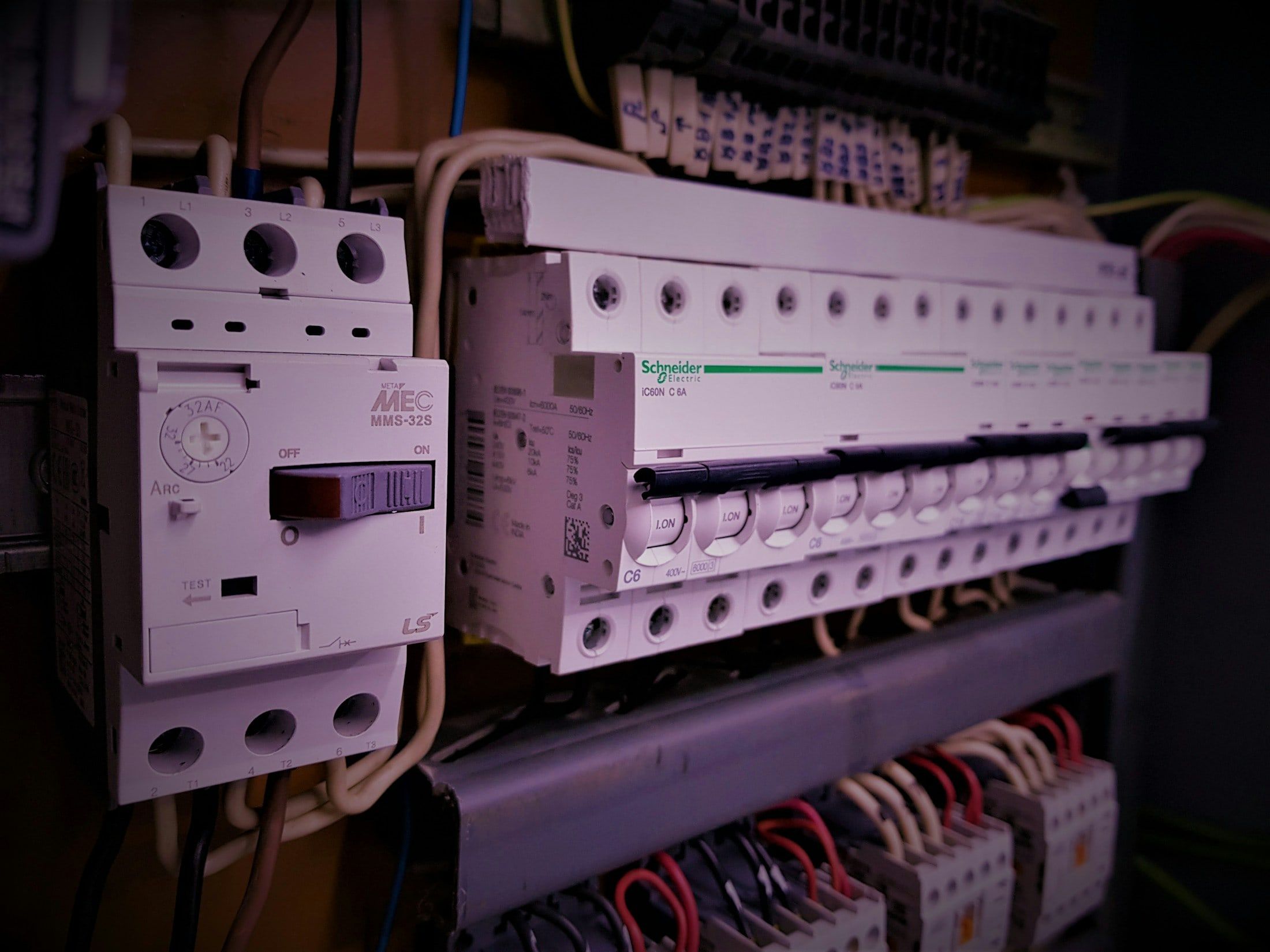
| A smell of burning, a warm screw-in fuse or a discoloured socket | Overheating in a connection. That part must be taken out of use |
A circuit is the sockets and lights that share one fuse. The main fuse is the fuse that decides how much electricity the whole home can use at the same time.
When the same fuse keeps tripping
A fuse that trips often is, according to the Swedish National Electrical Safety Board, Elsäkerhetsverket, a sign of overload or of a fault in the installation or in a connected product. Start by doing the sums. A 10 A fuse can take about 2,300 W and a 16 A fuse about 3,700 W, because power is 230 V times the current.
This is what you can do yourself:
- Unplug the appliances on the circuit and reset the fuse. A screw-in fuse is replaced with a new one of the same rated current.
- Plug the appliances back in one at a time. If the fuse trips at a particular appliance, that is probably the one that is faulty.
- Move one of the appliances that draws a lot of power to a socket on another circuit.
Never fit a larger screw-in fuse than the one that was there. If the fuse trips straight away, with nothing plugged in, the fault is in the fixed installation. That is a job for an electrical installation company (elinstallationsföretag). There is more in the article when the fuse keeps tripping.
If it is the main fuse that trips, it may be too small for the house. Kraftringen writes that main fuses that trip often can be a sign that you need a larger fuse. That work is described on the page about meter cabinets and the main fuse.
When the RCD trips
An RCD cuts the power when current leaks to earth, so when it trips it is doing its job. You can narrow down where the fault is yourself. The method is based on Elsäkerhetsverket’s advice on the RCD.
- Switch off all the circuit breakers, or unscrew all the screw-in fuses. A circuit breaker is a fuse that switches itself off and can be switched back on.
- Reset the RCD.
- Switch the fuses back on one at a time.
- If the RCD trips when a particular fuse is switched on, the fault is probably on that circuit.
- Unplug everything connected to the circuit and try again. If the RCD now stays on, the fault is in an appliance. If it trips anyway, the fault is in the fixed installation.
Also test the RCD with the test button at least twice a year. If the power does not cut out when you press it, contact an electrical installation company. The full walk-through is in the article when the RCD trips.
How fault-finding is done
Fault-finding means narrowing down the fault step by step, instead of replacing parts at random.
- You tell us what is happening. When it started, which fuse is involved and whether it is linked to the weather or to a particular appliance.
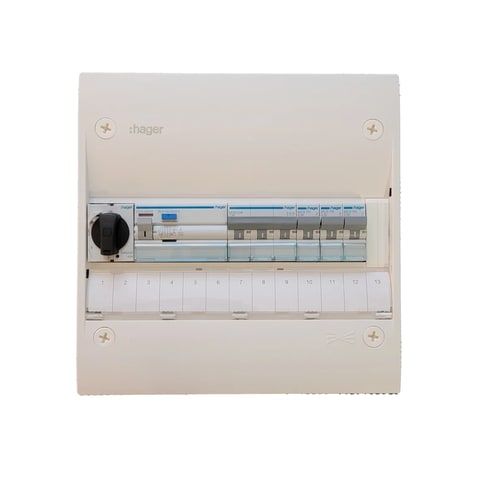
- We go through the consumer unit. The circuit chart, that is the list of what each fuse feeds, shows which sockets and lights belong to the circuit.
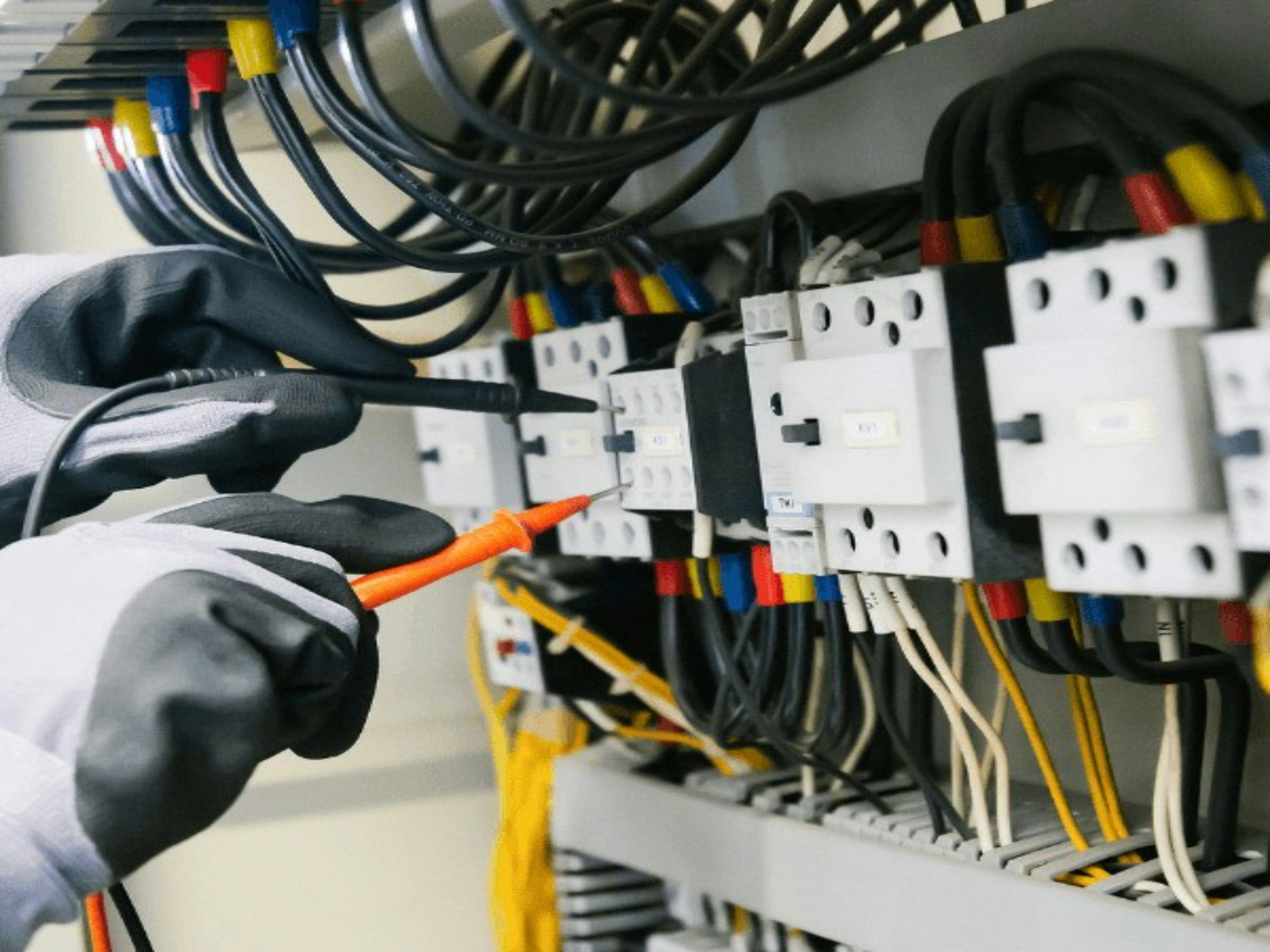
- We measure. The circuit is split up and measured section by section until the fault has been pinned down.
- You are told what is wrong. And what needs to be done to repair it.
According to Elsäkerhetsverket, there should be an up-to-date circuit chart at the consumer unit. If it is missing, or is not correct, fault-finding takes longer. We can draw up a new one.
Why fault-finding has no fixed price
Fault-finding has no fixed price, because nobody knows in advance how long it will take to find the fault. The fixed prices in our list apply to jobs where the scope is known, and the list states explicitly that fault-finding in the existing installation is not included.
What decides the time is:
- whether the fault is there all the time or comes and goes
- how large the installation is and how many circuits it has
- whether there is a circuit chart that is correct
- how easy it is to get at boxes, sockets and cables
- whether the fault is in an appliance or in the fixed installation.
Ask for an approximate price estimate before the work starts. If you have been given one as a private individual, the final price may not, under the Swedish Consumer Services Act (konsumenttjänstlagen), be more than 15 per cent higher, unless you have agreed on a different limit or additional work has been added.
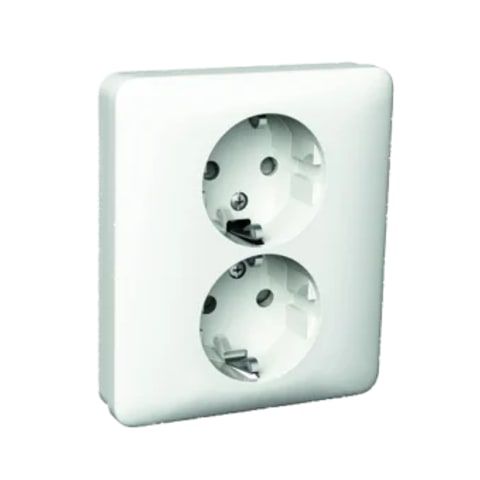
Once the fault has been found, the price list applies to the repair, if the job is in it. Replacing a flush-mounted, earthed double socket costs SEK 388, and a new 16 A circuit breaker from Hager costs SEK 148. Materials, installation and VAT are included, and a travel charge of SEK 500 is added. There is more about fixed prices and time and materials in the article what an electrician costs.
The ROT deduction does not cover fault-finding
Fault-finding on its own does not qualify for the Swedish ROT tax deduction for labour on your home (ROT-avdrag). That is stated explicitly on the list of electrical work published by the Swedish Tax Agency, Skatteverket, for both houses (detached, semi-detached and terraced) and tenant-owner flats (bostadsrätt).
If the fault-finding leads to work that is on the list, such as replacing sockets or adding to the consumer unit, that work can qualify for a deduction of 30 per cent of the labour cost in 2026. Ask for an invoice that shows each job separately. As a private individual you are entitled to an itemised bill when you ask for one.
When to cut the power straight away
If you smell burning, a screw-in fuse is too hot to touch or a socket has become discoloured, cut the power to that part and leave it switched off. Under Elsäkerhetsverket’s regulations, faults that may be an immediate danger must be dealt with at once, or the faulty part must be taken out of use. If there is a fire, call 112.
Warning signs to take seriously are:
- a smell of burning
- discoloured or cracked sockets
- screw-in fuses that are too hot to touch
- fuses that trip often
- plugs that make poor contact
- unusual noises.
We do not promise a particular time in advance. Call and describe what has happened, and we will tell you when we can come. Our service plan at SEK 499 a month includes a reply within 24 hours. More signs are listed in the article on warning signs of electrical faults.
Who is responsible for the fault
Whoever owns or is in charge of the electrical installation is responsible for getting the fault fixed.
- Detached and terraced houses. As the owner of the house you are responsible for the whole installation.
- Tenant-owner flat. Normally you are responsible for the electrics from the flat’s consumer unit inwards, but the tenant-owner association’s statutes (stadgar) decide.
- Rented flat. In most cases the landlord is responsible. Report the fault to them.
- Rented premises. The property owner is normally responsible, unless the lease says otherwise.
There is more about where the boundaries run on the pages for flats and tenant-owner flats and businesses and properties.
Fault-finding in Malmö and the rest of Skåne
We are based in Malmö and trace electrical faults in flats, detached houses and premises across the city and in the rest of Skåne. Two questions save time before you call:
- Are the neighbours without power too? Then it is probably an outage in the grid, and that is a matter for the grid operator (elnätsföretag), the company that owns the local grid, not the company you buy electricity from. In Malmö, E.ON Energidistribution owns the grid in practically the whole city.
- Who should the fault be reported to? Four out of five homes in Malmö are in blocks of flats, according to Statistics Sweden (SCB), and just over half of those flats are rented. If you live in a rented flat, the report goes to the landlord.
More homes in Malmö are in buildings from 1961–1970 than from any other decade. RCDs became a requirement for new homes in 2000, so an older consumer unit that has not been rebuilt may not have one. There is more about the city and the grid on the page electrician in Malmö, and the other municipalities are in the overview of places.
Sources
- Elsäkerhetsverket – The RCD, your safety (in Swedish)
- Elsäkerhetsverket – Checklist for checking an electrical installation (in Swedish)
- Elsäkerhetsverket – The consumer unit (in Swedish)
- Elsäkerhetsverket – Replacing a blown screw-in fuse (in Swedish)
- Elsäkerhetsverket – Responsibility for the electrical installation (in Swedish)
- Elsäkerhetsverket's regulations on checks by the holder of the installation (ELSÄK-FS 2022:3) (in Swedish)
- Kraftringen – Fuse-based fee and main fuse (in Swedish)
- Skatteverket – Does the work qualify for the ROT deduction? (in Swedish)
- The Consumer Services Act, konsumenttjänstlag (1985:716), riksdagen.se (in Swedish)