


The Swedish tax reduction for green technology (grön teknik) lowers the price of an EV charger (wallbox) by half the cost of labour and materials. If you own your home, you get the deduction directly on the invoice, and the company that does the installation claims the money from the Swedish Tax Agency, Skatteverket. Here is what counts, what does not and which conditions you have to meet.
How much you get in 2026
The tax reduction is 50 per cent of the cost of labour and materials, up to SEK 50,000 per person per year. That is stated on Skatteverket’s page on the green technology reduction. The ceiling applies to all the green technology you buy during the year taken together, so solar panels and battery storage count too.
In our price list it looks like this:
| Charger with installation | Without deduction | With grön teknik |
|---|---|---|
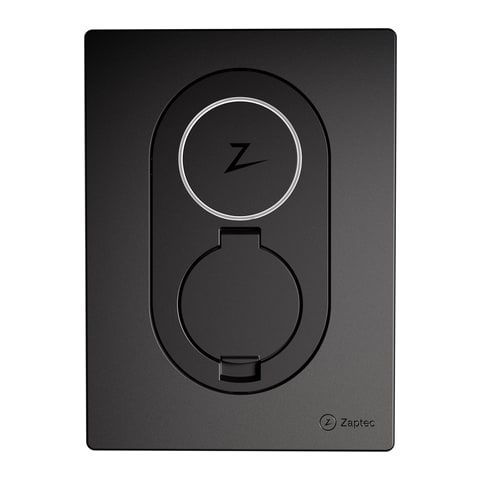
| Zaptec Go 11 kW | SEK 11,096 | SEK 5,548 |
| Zaptec Go 22 kW | SEK 11,428 | SEK 5,714 |
Two things are worth knowing about the amounts. If an installation is sold at a fixed total price, the cost of labour and materials may, according to Skatteverket, be calculated as 97 per cent of the total price. You must also have paid enough tax during the year to be able to use the whole reduction.
What counts and what does not
Skatteverket has a list of approved work for the green technology reduction. For charging electric vehicles it looks like this:
| Cost | Qualifies for grön teknik |
|---|---|
| Wall-mounted EV charger or free-standing charging post that is only used by your own household | Yes |
| Bracket and cable run from the charger to the consumer unit | Yes |
| Charging cable | Yes, normally |
| Materials that you buy from someone other than the installer | No, then only the installation work qualifies |
| Materials only, without installation | No |
| New, replaced or extended consumer unit ahead of the installation | No, but the work can qualify for the Swedish ROT tax deduction for labour on your home (ROT-avdrag) |
| Portable charger and extra charging cables | No |
| Freight, travel, machinery and design work | No |
| Repair and maintenance of an EV charger | No |
| Charge point used by several households | No |
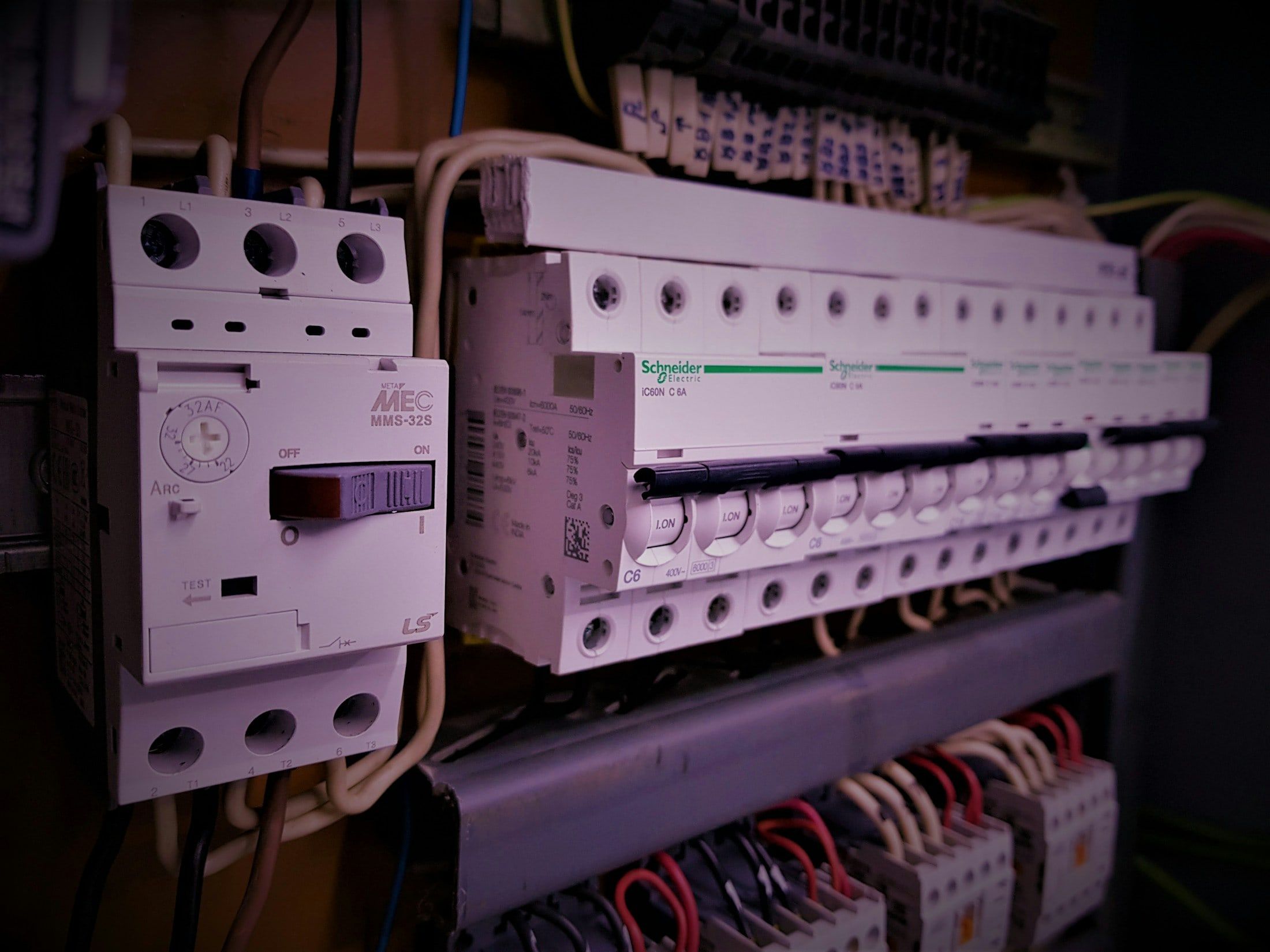
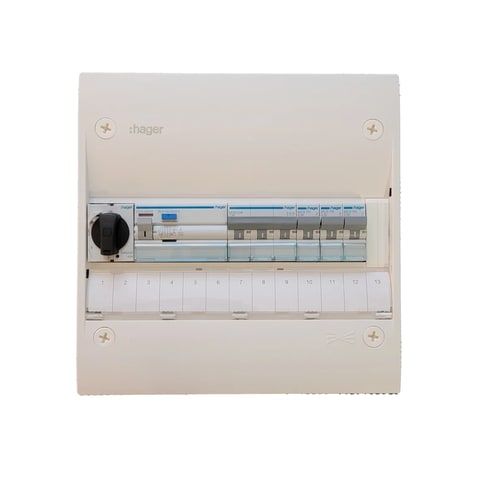
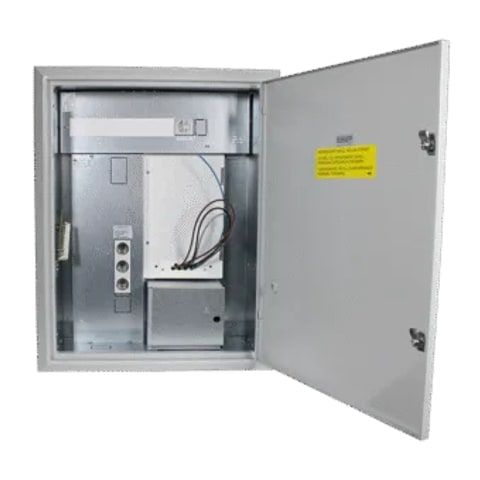
The line about the consumer unit is the one that most often comes as a surprise. If the unit has to be extended so that the charger gets a circuit of its own, that is a separate job, with a deduction of its own. A circuit is the sockets and appliances that share one fuse.
The travel charge in our price list, SEK 500, is a travel cost. So it does not qualify for any deduction.
The conditions you have to meet
The tax reduction requires that
- you own the home when the work is done. It can be a house (detached, semi-detached or terraced), an owner-occupied flat (ägarlägenhet) or a tenant-owner flat (bostadsrätt), and the home must be part of your or your parent’s household
- payment is made electronically
- the company is approved for F-tax (F-skatt), which means the company pays its own tax and social security contributions
- the company both supplies the materials and carries out the installation
- the charge point is prepared for electricity metering and for billing the cost of the electricity, and has a socket or connector of type 2 or type Combo.
The last two points are things you should ask about when you compare quotes. A charger that you have bought yourself online only qualifies for a deduction on the work of putting it up.
A building that is under construction and is to become a house or an owner-occupied flat also counts. So grön teknik can be given for a new build, unlike ROT.
Grön teknik or ROT
Grön teknik is nearly always the better choice for the charger itself, because the deduction is calculated on both labour and materials. Skatteverket is clear that the two deductions cannot be given for the same work.
| Condition | Grön teknik | ROT |
|---|---|---|
| Share | 50% of labour and materials | 30% of the labour cost |
| Ceiling per person per year | SEK 50,000 | SEK 50,000, and at most SEK 75,000 together with RUT (the matching deduction for household services) |
| EV charger on an outside wall or in a garage, house | Yes | Yes, but not for the same work |
| Free-standing charging post, house | Yes | No |
| EV charger in a tenant-owner flat | Yes, if the conditions are met | No |
| New or extended consumer unit | No | Yes |
| Repair of an EV charger | No | No |
The ceilings are separate from each other. If you have used up your whole allowance for grön teknik, you can still have room left for the ROT and RUT deductions, and the other way round.
Two separate jobs can each qualify for a deduction of its own. If a charger is put up and the consumer unit is extended on the same visit, they must be separate lines on the invoice: the charger with grön teknik and the consumer unit with ROT. There is more about that deduction in the article on the ROT deduction for electrical work.
How it works in practice
- You order the charger and the installation from the same company. If you live in a tenant-owner flat, the contract must be made with you as the tenant-owner.
- The company does the installation.
- You get an invoice where the tax reduction has already been deducted, and pay it electronically.
- The company requests payment of the rest from Skatteverket, no later than 31 January of the year after the final payment for the installation was made.
It is the final payment that decides which year the reduction counts against. We help with the application when you buy a Zaptec Go from us.
Tenant-owner flats, rented flats, associations and companies
Grön teknik is for private individuals who own their home. This is how it looks for different groups:
- Tenant-owner flat. You can get grön teknik if the contract is made with you, the charge point is only used by your household and the installation stays with the flat when it is sold. Check with the tenant-owner association (bostadsrättsförening) before you order, because the electrics outdoors and in shared areas are usually the association’s responsibility.
- Rented flat. You do not own the home and cannot get the tax reduction.
- Tenant-owner association. Charge points used by several households do not qualify for grön teknik. The association can apply for the grant Ladda bilen (“charge the car”) from the Swedish Environmental Protection Agency, Naturvårdsverket: up to 50 per cent of the cost, at most SEK 15,000 per charge point, as long as funding is available.
- Companies. No grön teknik. Companies can also apply for Ladda bilen, but must then apply before the work starts.
The tax reduction is not given for an installation that has received a government grant. There is more about the route for associations in the article on charging spaces in a tenant-owner association.
Will the rules still apply next year?
At the time of writing, 28 November 2026, there is no decision and no proposal in the budget bill to change the level or the ceiling for grön teknik. The budget has not, however, been finally dealt with by the Swedish parliament. Because it is the final payment that decides, it is wise to check Skatteverket’s page if your installation will be paid for after the turn of the year.
When to get in touch
If you want to know what your particular installation costs after the deduction, send us a photo of the consumer unit and of the place where the charger is to go. Then we can tell you whether any of the work falls outside grön teknik. The amounts before and after the deduction are in the price list for EV chargers, and how an installation is done is described on the page about EV chargers.
Sources
- Skatteverket – Tax reduction for green technology (in Swedish)
- Skatteverket – Approved work, green technology (in Swedish)
- Skatteverket – How the tax reduction for green technology works (in Swedish)
- The Swedish Income Tax Act, Inkomstskattelag (1999:1229), chapter 67 (in Swedish)
- Naturvårdsverket – Ladda bilen, “charge the car” (in Swedish)