



Yes, you may charge your electric car (EV) from an ordinary socket. There is no ban. The Swedish National Electrical Safety Board, Elsäkerhetsverket, writes on its page about charging stations that for private use and charging at up to 16 A there are no requirements to have an EV charger (wallbox). The same authority still advises against charging from a socket. Ordinary sockets are not intended for regular, prolonged and high loads, and the recommendation is to install a charger.
Allowed, but the authority advises against it
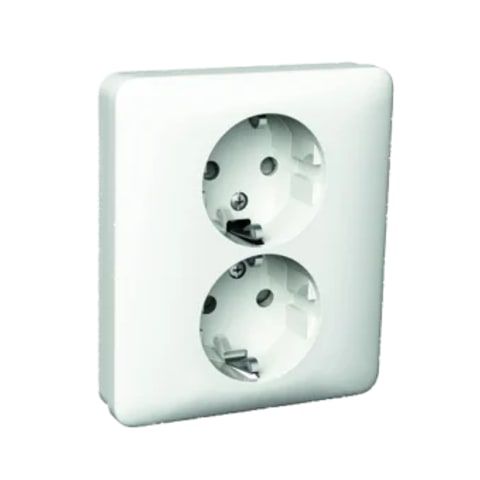
A ban and advice against something are worth keeping apart. You are not breaking any rule when you charge from the socket on the garage wall. Elsäkerhetsverket does, however, write in its advice on installing an EV charger that the recommendation is not to use the ordinary socket, and to have a charger installed instead.
The advice applies to guests too. Asked whether visitors may charge from a socket in the garage, the authority answers that it advises against charging electric vehicles from ordinary sockets.
Why the socket is the weak point
The car is not the problem. It is the socket and what sits behind it.
An electric car charges at the same current for many hours. A kettle can draw just as much, but only for a few minutes. SEK Svensk Elstandard, the Swedish electrical standards body, writes in its brochure on electric car charging that ordinary sockets are not designed for a continuous load of 16 A.
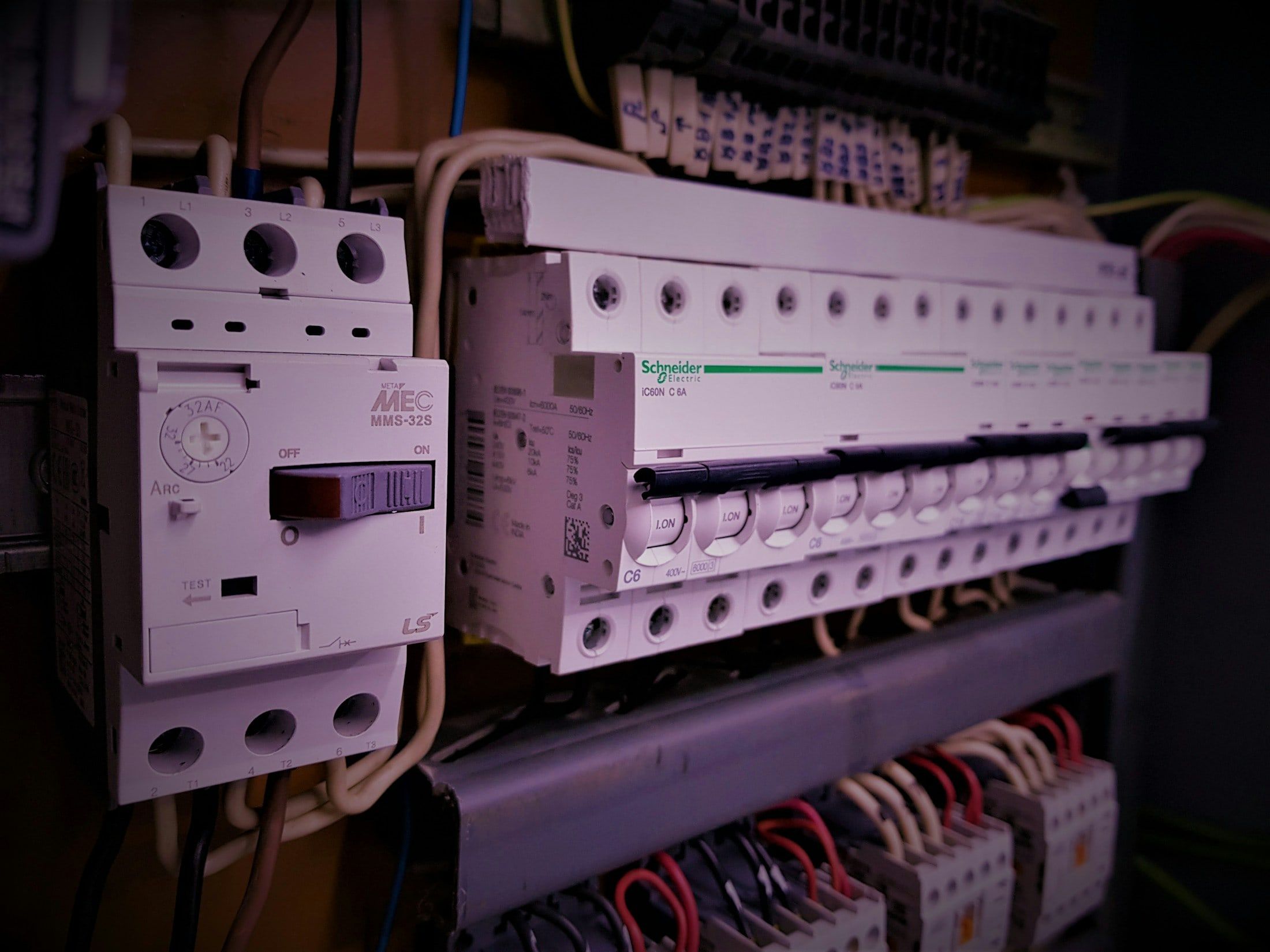
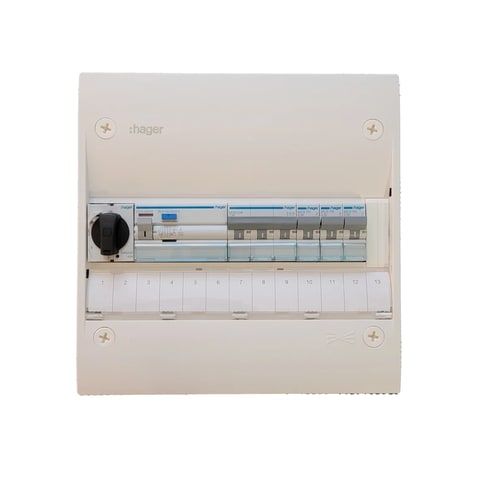
Elsäkerhetsverket describes the risk on its page about safety risks when charging: loose connections or poor contact points in sockets, junction boxes and the consumer unit can cause overheating and result in fire. So the fault does not have to be in the socket you can see. A joint in a box further along the cable, or a connection in the consumer unit, can get hot too.
The same page states that sockets in general cause around 70 call-outs by the Swedish fire and rescue services to ordinary homes every year. About charging at a correctly installed charge point, the authority writes that the risk is very low.
If you charge from the socket anyway
Sometimes there is nothing else, for example while you wait for the charger or for a night at a relative’s house. In that case, do this:
- Lower the charging current. There is no rule about a particular number of amps, but there are two pieces of advice. The guide from the Swedish Civil Contingencies Agency (MSB), the Swedish National Board of Housing, Building and Planning (Boverket) and Elsäkerhetsverket says 8–10 A and adds that a lower charging current is safer. SEK Svensk Elstandard says 6–8 A for prolonged loads. The current can often be set in the car or on the control box of the charging cable.
- Have the installation checked. Elsäkerhetsverket writes that it is very important to hire an electrical installation company (elinstallationsföretag) that goes through the installation and checks that its parts can take a high load over a long time.
- Look at the plug and the socket. Look for wear, soot and signs of overheating. A socket that is discoloured, cracked or loose must not be used.
- Use an earthed socket. Outdoor sockets must always have a protective earth, and new outdoor sockets are required to have a residual current device (RCD). An RCD cuts the power when current leaks to earth.
- Charge directly from the socket. Every extension lead and multi-way extension lead adds contact points that can get hot.
- Stop if anything gets warm. Feel the plug after a while. If it is hot, or there is a smell of burning, stop charging there.
How much the car manages to charge
The power is 230 V times the current on one phase (one live conductor). The table shows some examples and how much energy that gives in ten hours.
| Charging | Power | Energy in ten hours |
|---|---|---|
| Socket, 6 A | about 1.4 kW | about 14 kWh |
| Socket, 8 A | about 1.8 kW | about 18 kWh |
| Socket, 10 A | about 2.3 kW | about 23 kWh |
| EV charger on one phase, 16 A | about 3.7 kW | about 37 kWh |
| EV charger on three phases, 16 A | about 11 kW | about 110 kWh |
Compare that with what your car uses per mil (ten kilometres) and how far you drive on an ordinary day. Elsäkerhetsverket writes in its advice on planning the charge point that lower charging power is often enough for the daily commute if the car can charge all night. So speed is rarely the big problem with the socket. The problem is the load on an installation that was not built for it.
What a charger gives you that the socket lacks
- Its own RCD. The charger must have its own RCD of the right type and may not be connected downstream of the house’s existing one.
- An installation made for the load. Elsäkerhetsverket writes that the installation must be dimensioned to handle a high load for a long time.
- Load balancing. The charging power is lowered automatically when the house is using a lot of electricity, so that the main fuse does not trip. The main fuse decides how much electricity the home can use at once. More is in the article on load balancing.
- Control. Elsäkerhetsverket mentions that a charger can make it possible to control the charging.
An EV charger must always be installed by an electrical installation company. Whether it needs a pre-notification (föranmälan), a notice the electrical installation company files with the grid operator before the work starts, depends on which grid operator (elnätsföretag) you have. The grid operator is the company that owns the local grid, not the company you buy electricity from. We go through this in the article on pre-notification of EV chargers.
What the charger costs
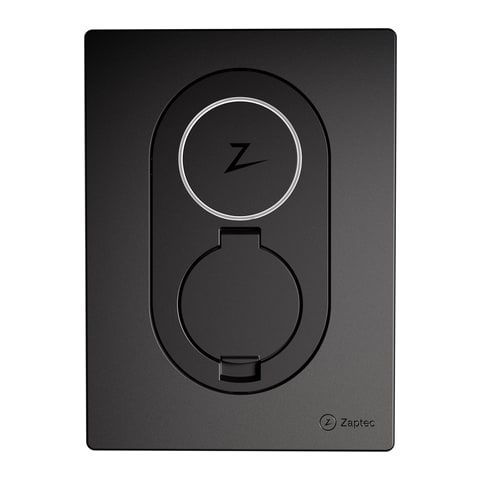
From us, a Zaptec Go 11 kW costs SEK 11,096 with installation, or SEK 5,548 with the Swedish tax reduction for green technology (grön teknik). EV charger, installation, cable and commissioning are included. Load balancing with Zaptec Sense costs SEK 928, or SEK 464 with grön teknik. A travel charge of SEK 500 is added, and the prices apply to a standard installation.
In 2026 the green technology reduction gives 50 per cent of the cost of labour and materials when you install an EV charger, up to SEK 50,000 per person per year. You must own the home. More is in the article on the green technology reduction for EV chargers.
When the socket will do for a while
The guide from MSB, Boverket and Elsäkerhetsverket talks about regular charging. The risk grows with how often and for how long the socket is loaded. If you charge a plug-in hybrid with a small battery once a week or so, the socket is loaded less than by an electric car that charges every night.
That does not make the socket a solution for several years. If you can see that the car will be plugged into the socket most nights, the charger is what you should plan for.
When to get in touch
Get in touch if the plug or the socket gets warm, if you want the installation checked before you charge from it, or if you want to move over to an EV charger. Tell us where the car is parked, how far it is to the consumer unit and what main fuse you have. How the installation is done is on the page about EV chargers, and all the amounts are in the price list for EV chargers.
Sources
- Elsäkerhetsverket – Charging stations (in Swedish)
- Elsäkerhetsverket – Installing an EV charger (in Swedish)
- Elsäkerhetsverket – Safety risks when charging electric cars (in Swedish)
- Elsäkerhetsverket – May visitors who want to charge an electric car do so from a socket in my garage? (in Swedish)
- MSB, Boverket and Elsäkerhetsverket – Safe expansion and use of charging infrastructure for rechargeable vehicles, 2025 (in Swedish)
- SEK Svensk Elstandard – Electric car charging, 2019 (in Swedish)
- Elsäkerhetsverket – Plan your charge point (in Swedish)
- Elsäkerhetsverket – Safe electricity outdoors (in Swedish)
- Skatteverket – Green technology (in Swedish)