











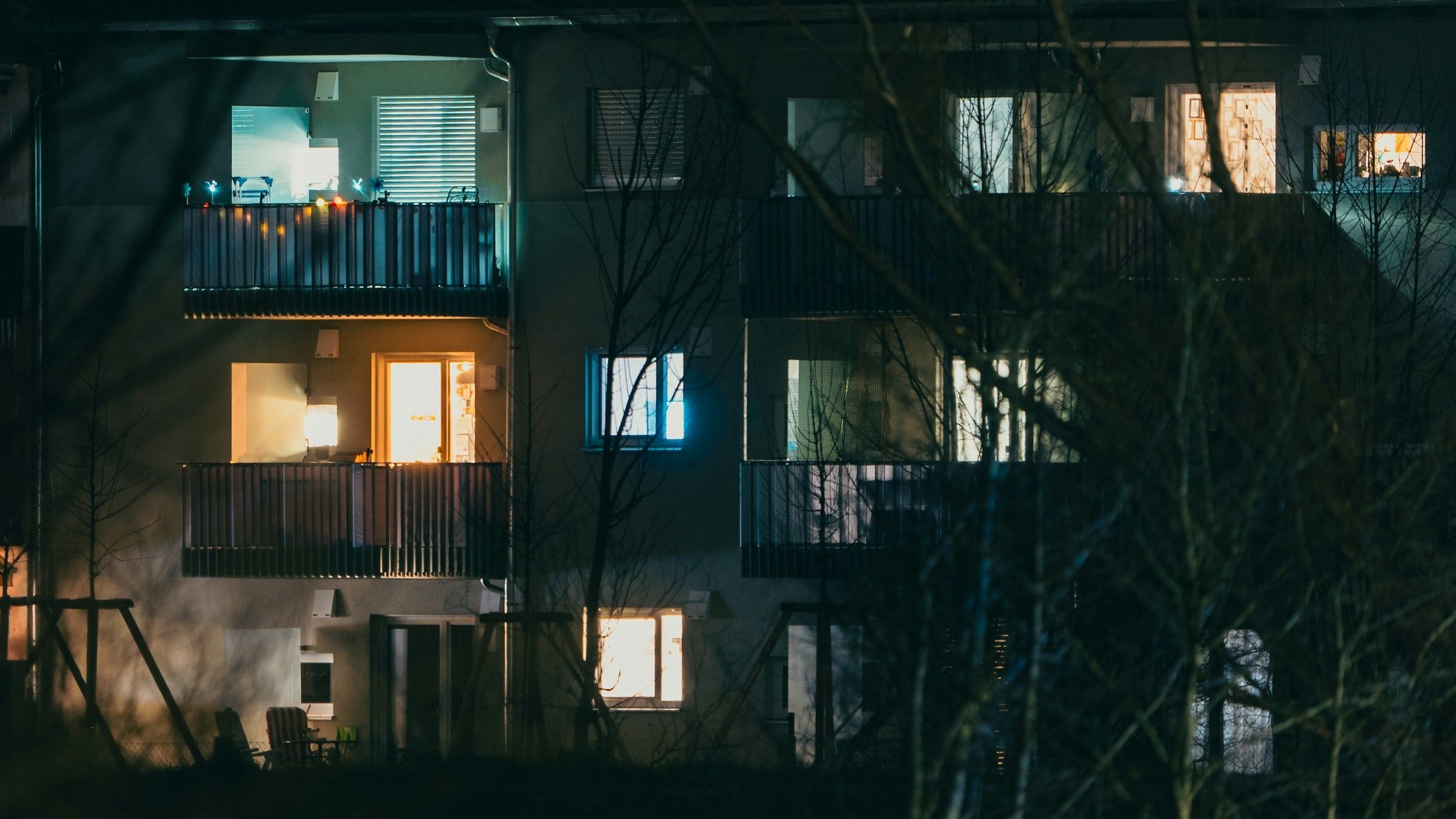
Where is the line between you and the association?
The statutes (stadgar) of your tenant-owner association (bostadsrättsförening) decide. According to the Swedish National Electrical Safety Board, Elsäkerhetsverket, the association’s responsibility usually ends at the flat’s consumer unit, and there you take over as tenant-owner. The Swedish Tenant-Ownership Act (bostadsrättslagen) says that you are not responsible for repairing electrical cables that the association has provided the flat with and that serve more than one flat.
| Part of the installation | Normally responsible |
|---|---|
| The electrics from the flat’s consumer unit inwards | You |
| Sockets, switches and lighting outlets in the flat | You |
| Cooker, fridge, freezer, dishwasher and washing machine | You |
| Cables that serve more than one flat | The association |
| Stairwells, attic and basement storage rooms and electrics outdoors | The association |
The table shows what is usual. If the statutes say something else, the statutes apply.
The Tenant-Ownership Act requires the board’s permission for, among other things, changes to the ventilation and for other substantial alterations to the flat. Electrical cables are not specifically mentioned in the list in the Tenant-Ownership Act, but the statutes may set their own requirements. Ask the board before a major conversion. The full division of responsibility is set out in the article electrics in a tenant-owner flat (bostadsrätt).
If you live in a rented flat, it is in most cases the landlord who is the holder of the electrical installation (innehavare), the owner or user who is responsible for it. Speak to the landlord first.
What is usually done in a flat
- Earthed sockets. Changing an unearthed socket to an earthed double socket costs SEK 881 per socket, or SEK 617 with the Swedish ROT tax deduction for labour on your home (ROT-avdrag). Up to 10 metres of new cable is included. Every socket in the room has to be replaced, because earthed and unearthed sockets must not be in the same room.
- New consumer unit in the flat. A 1×13 consumer unit costs SEK 5,810, or SEK 4,780 with ROT. The designation means one row with 13 spaces for fuses and breakers.
- More sockets. A new flush-mounted double socket costs SEK 1,720 with up to 7 metres of cable. Chasing (cutting channels in the wall) is not included. In concrete walls a surface-mounted socket for SEK 1,514 can be the alternative.
- Dimmers and lighting outlets. Changing to a rotary dimmer from Plejd costs SEK 1,288, and replacing a ceiling lighting outlet (the plug-in outlet for a light fitting) SEK 638.
Materials, installation and VAT are included in the amounts. A travel charge of SEK 500 is added. All the items are listed under fixed prices for sockets and fixed prices for consumer units.
Unearthed sockets do not have to be replaced. In homes built before 1994 there are usually earthed sockets in the kitchen, while the other rooms often have unearthed ones. A residual current device (RCD), which cuts the power when current leaks to earth, protects unearthed sockets too. Even so, it does not replace earthing. The background is in the article on unearthed sockets.
Electrics in the kitchen and bathroom when you renovate
Bring the electrical work in early in the renovation. What is to go in floors and walls has to be done before the surface finishes are in place.
- Bathroom. Every circuit in the bathroom, that is, the sockets and lights that share one fuse, must be protected by a 30 mA RCD. A socket must be at least 60 cm from the edge of the bath or 120 cm from the fixing point of the shower head. The closer to the shower and bath, the higher the IP rating required of the equipment. The rating states how well an electrical product withstands dust and water.
- Underfloor heating. The whole job must be done by a registered electrical installation company (elinstallationsföretag). You cannot lay the cable yourself and have someone connect it, because part of the inspection and testing has to be done before the floor is screeded. A starter kit for 1 m² with thermostat costs SEK 5,988.
- Bathroom extractor fan. A permanently connected fan must be connected by an electrical installation company. In a block of flats the fan can be part of the building’s ventilation, and changes to the ventilation require the board’s permission.
- Kitchen. A cooker or hob that is permanently connected, and new sockets at the worktop, are electrical installation work. In kitchens from before 1994, earthed sockets are sometimes missing at the dining area while the kitchen part is earthed. In that case the sockets should be put right. There is more in the articles on electrics in the kitchen and on connecting a cooker, hob and white goods.
How we plan the work is described on the page electrics when renovating, and the rules for wet rooms in the article electrics in the bathroom.
The ROT deduction in a tenant-owner flat
You get the ROT deduction for electrical work that is done inside the flat and that you are responsible for under the association’s statutes. In 2026 the deduction is 30 per cent of the labour cost, up to SEK 50,000 per person per year. Materials and travel do not count.
According to the list of ROT work from the Swedish Tax Agency, Skatteverket, the following qualifies for the deduction in a tenant-owner flat:
- installing and adding to a consumer unit
- running electrical cables from the consumer unit out into the home
- replacing and fitting sockets or installing recessed spotlights
The following gives no deduction:
- electrics outdoors or to a consumer unit outside the home
- an EV charger (wallbox)
- fault-finding alone
- alarms and surveillance cameras
In a newly built tenant-owner flat in a block of flats, conversion work can qualify for the deduction as soon as the home is completed. In a rented flat there is no ROT deduction, because you have to own your home.
Charging in the association’s car park
Charging spaces in a shared car park are a matter for the association. The association can apply for the grant Ladda bilen (“charge the car”) from the Swedish Environmental Protection Agency, Naturvårdsverket, which is up to 50 per cent of the cost and at most SEK 15,000 per charge point, as long as funding is available. The Swedish tax reduction for green technology (grön teknik) does not apply to a charge point used by several households. How the association goes about it is described in the article on charging spaces in a tenant-owner association.
Before you get in touch
- Read the statutes, so that you know what you are responsible for.
- Take a photo of the consumer unit with the cover open.
- Count the sockets in the rooms that are to be redone, and note whether the walls are concrete.
LVJ-EL is registered with Elsäkerhetsverket for electrical installation work in dwellings, and you can check that in Elsäkerhetsverket’s register search Kolla elföretaget (“check the electrical company”). Send the details via contact and quote. If the job is in the price list, the fixed price for a standard installation applies. Otherwise you get a quote.
Sources
- Elsäkerhetsverket – Responsibility for the electrics in a tenant-owner flat (in Swedish)
- The Swedish Tenant-Ownership Act, bostadsrättslagen (1991:614), chapter 7 (in Swedish)
- Elsäkerhetsverket – Replacing an unearthed socket (in Swedish)
- Elsäkerhetsverket – Electrical installation in bathrooms and shower rooms (in Swedish)
- SEK Svensk Elstandard – Electrical installations in bathrooms (in Swedish)
- Skatteverket – Does the work qualify for the ROT deduction? (in Swedish)
- Naturvårdsverket – Ladda bilen for associations and residents' organisations (in Swedish)
