


The main fuse needs raising when your home uses more electricity at once than the fuse lets through, and there is no other way to solve it. You notice it when the main fuse trips, often when the EV charger (wallbox), the cooker and the heating are running at the same time. The change itself is small, but it must be made by an electrical installation company (elinstallationsföretag), which reports the change to the grid operator (elnätsföretag), the company that owns the local grid, not the company you buy electricity from. A change between 16, 20 and 25 A costs SEK 686 with us, or SEK 505 with the Swedish ROT tax deduction for labour on your home (ROT-avdrag), and that includes the pre-notification and completion notice (för- och färdiganmälan).
What the main fuse does
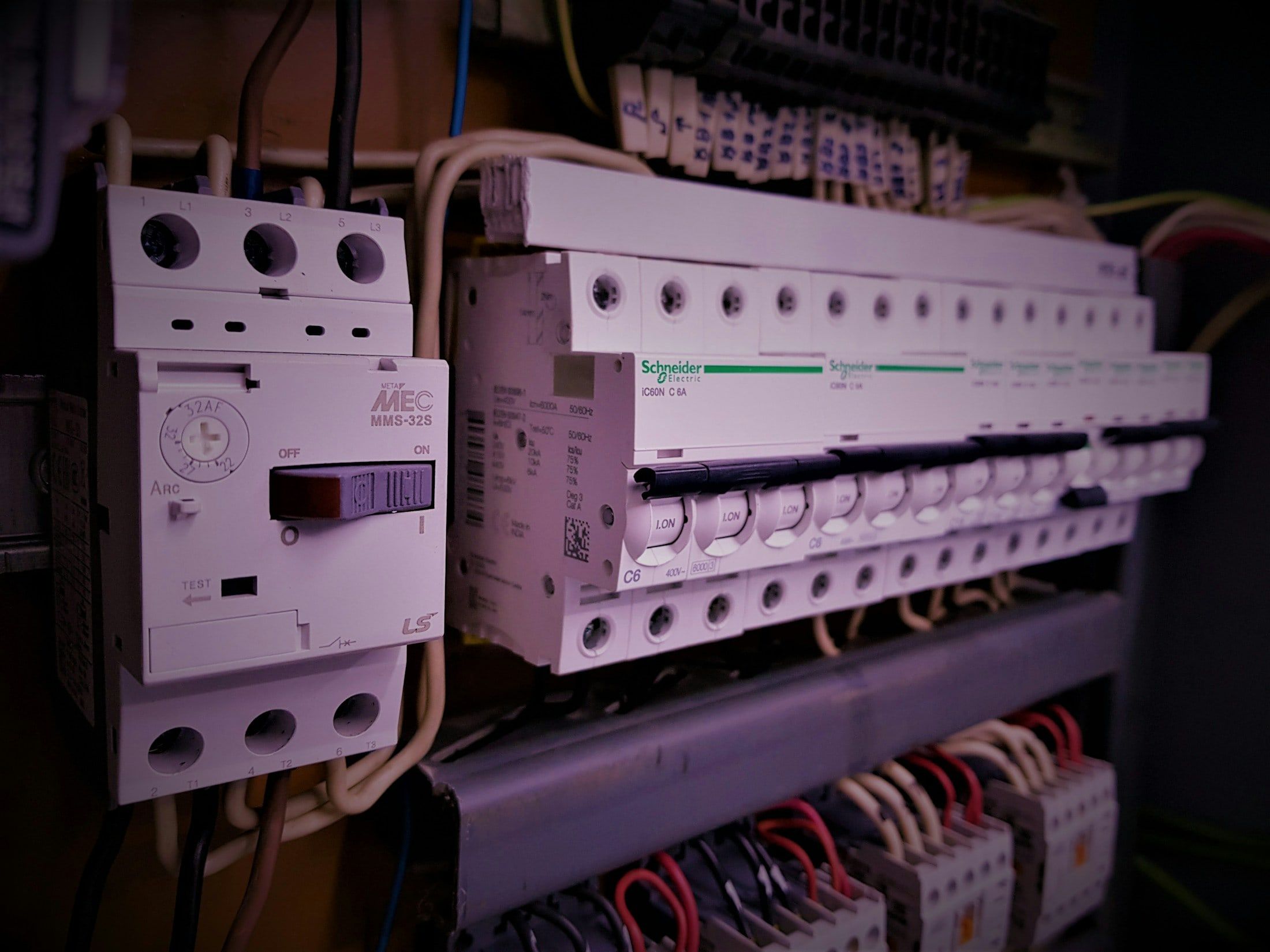
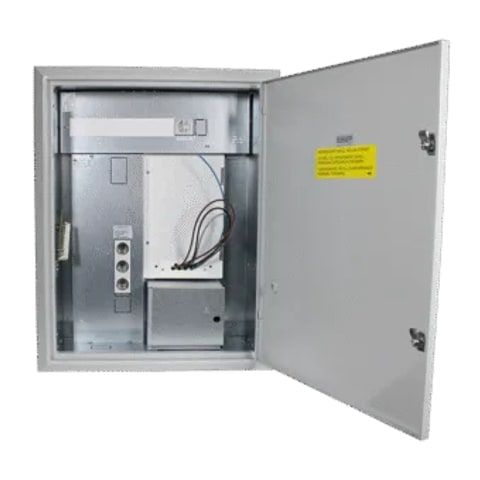
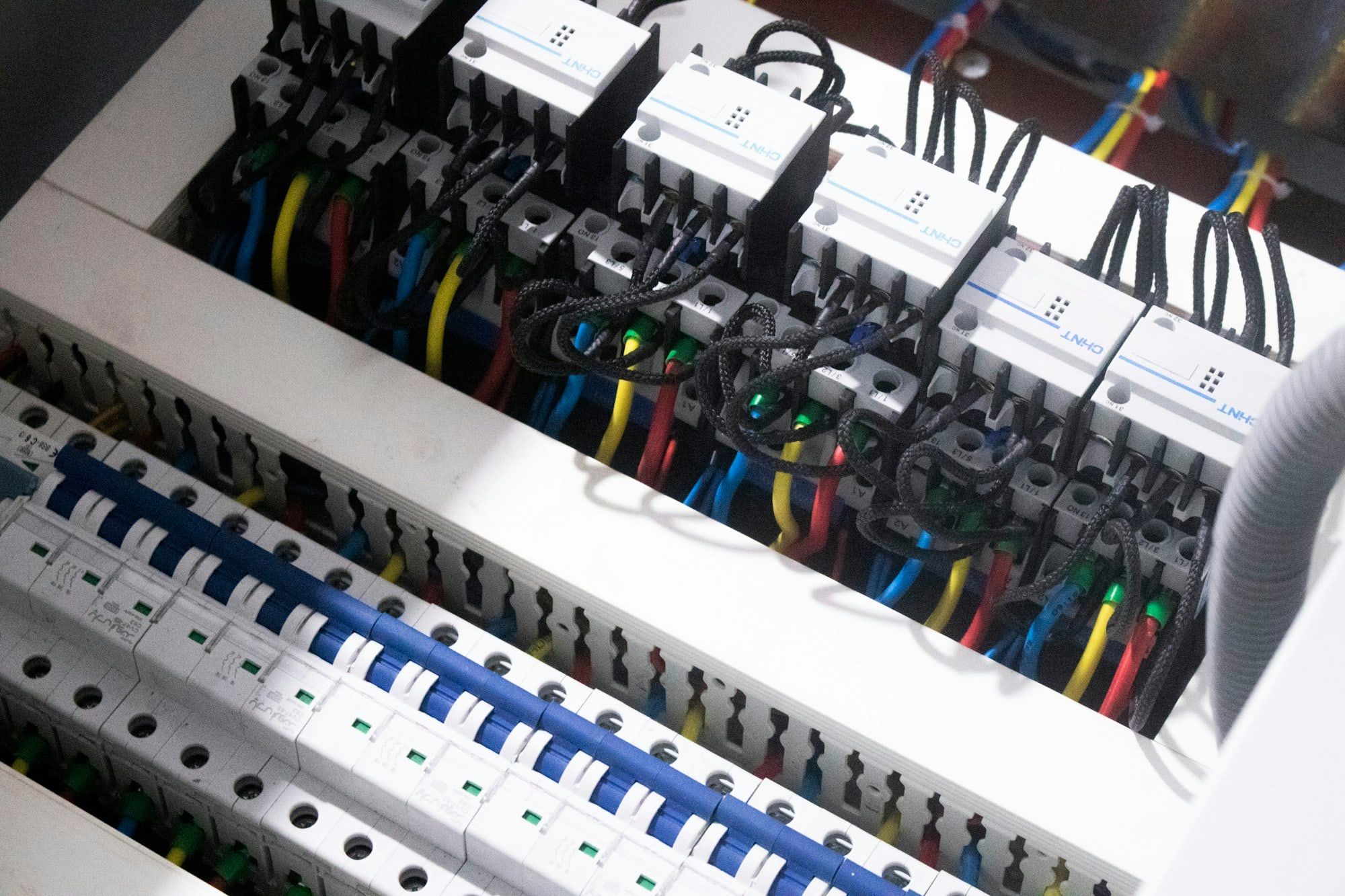
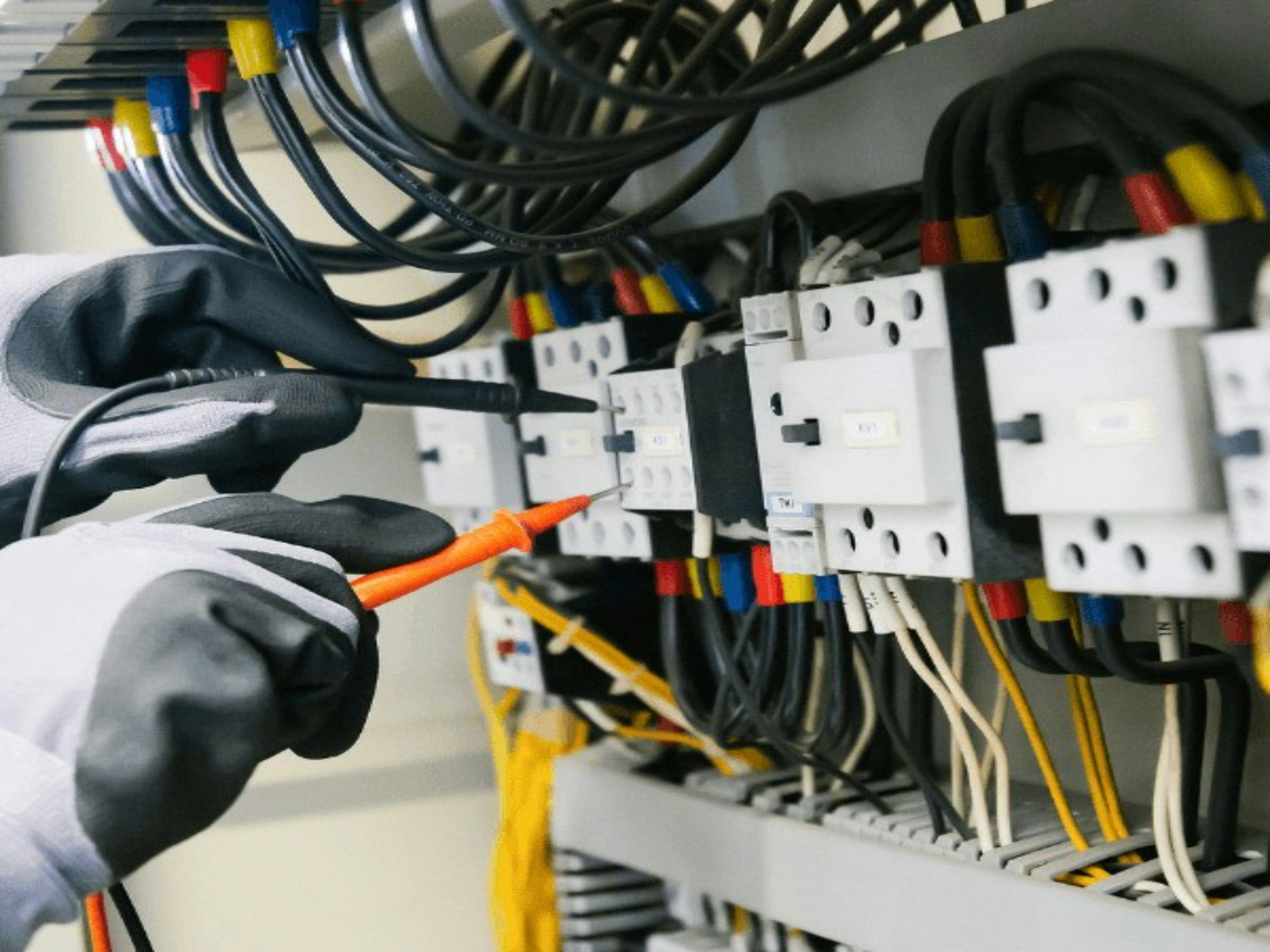
The main fuse sits before the electricity meter, in the meter cabinet or on the meter board. In a detached house with three-phase there are three of them, one for each phase. A phase is one of the live conductors coming into the house.
Kraftringen Nät writes on its page about the fuse-based fee (säkringsavgift) that the main fuse decides how much electricity you can use at any one time, and that 16 to 25 A is enough for most homes. E.ON calls the same thing the meter fuse (mätarsäkring). The size is set by a gauge piece, a small insert that only lets in fuses up to a certain size.
How much the fuse can supply
In a house with three-phase, the highest power you can draw at the same time is three times 230 V times the fuse’s current.
| Main fuse | Highest power at the same time on three-phase |
|---|---|
| 16 A | about 11 kW |
| 20 A | about 13.8 kW |
| 25 A | about 17.3 kW |
| 35 A | about 24.2 kW |
The figure only holds if the load is evenly spread. Each phase has its own fuse, and it is enough for one of the phases to be overloaded for its fuse to trip.
E.ON gives an example on its page about installing an EV charger. A normal charger charges at 11 kW on three phases, which corresponds to a 16 A fuse. With a 20 A meter fuse there is very little power left over for the rest of the house while the car is charging.
Signs that the fuse is too small
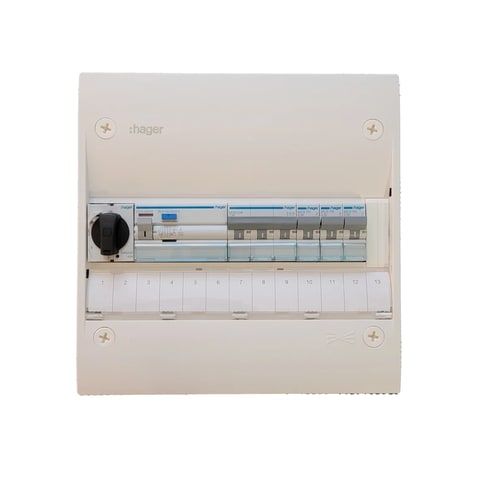
- It is the main fuse that trips, not a circuit fuse in the consumer unit, that is, the fuse for one circuit of sockets and lights.
- It happens when several large loads are running at the same time, for example on a cold evening when the cooker and the washing machine are on.
- You are going to connect something that draws a lot: an EV charger, a heat pump, a hot tub or a workshop with three-phase machines.
Kraftringen Nät writes that main fuses that trip often can be a sign that you need a larger fuse. If you are not sure what it is that trips, the article on when the fuse keeps tripping will help.
Try this before raising the fuse
A larger fuse costs more every month, because the fixed grid fee follows the size of the fuse. Three things can make the increase unnecessary.
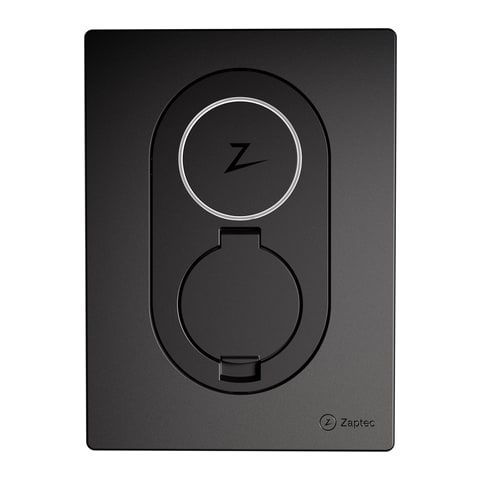
Load balancing for the charger. The Swedish National Electrical Safety Board, Elsäkerhetsverket, describes how equipment measures the load on the property and the charge point limits the power when needed. E.ON writes that with a load balancer you do not always need a higher meter fuse just because you get an EV charger. With us, load balancing with Zaptec Sense costs SEK 928, or SEK 464 with the Swedish tax reduction for green technology (grön teknik). How it works is explained in the article on load balancing.
A more even spread between the phases. If one phase is heavily loaded and the others are almost empty, an electrician can move circuits between the phases in the consumer unit.
Different habits. If the fuse only trips when the oven, the washing machine and the tumble dryer are running at the same time, it may be enough to spread them out.
How an increase is done
It is the grid operator, not Elsäkerhetsverket, that requires the pre-notification and completion notice. This is how E.ON, Kraftringen Nät and Öresundskraft describe the procedure.
- Review. The electrical installation company checks that the meter cabinet, the cables and the consumer unit can take the larger fuse. Elsäkerhetsverket points out that the grid operator must be contacted so that the supply cable can cope with it.
- Pre-notification (föranmälan). The electrical installation company gives notice of the change. Öresundskraft describes how the installer sends a pre-notification and the grid operator checks that the change is possible.
- Answer. E.ON writes on its page about changing a connection that the electrician can get an answer straight away for a simpler job such as raising the meter fuse. Larger changes to a connection can, according to E.ON, take between one and six months.
- Replacement. Gauge pieces and fuses are replaced.
- Completion notice (färdiganmälan). The electrical installation company reports that the change has been made. Only then does your grid fee change.
The terms differ slightly between grid operators. Landskrona Energi states, for example, that as a rule the main fuse may be changed at most once a year.
What it costs
The cost has two parts: the electrical installation company’s work and the grid operator’s fees.
Our work
| Job | Price | With ROT |
|---|---|---|
| Raising or lowering between 16, 20 and 25 A | SEK 686 | SEK 505 |
| Raising or lowering between 35, 50 and 63 A | SEK 885 | SEK 694 |
| Raising from 25 to 35 A in a Garo wall-mounted or free-standing meter cabinet | SEK 4,250 | SEK 3,820 |
| Raising from 25 to 63 A with up to 10 metres of underground duct | SEK 7,013 | SEK 6,110 |
The prices include materials, labour, VAT and the pre-notification and completion notice. A travel charge of SEK 500 is added, and the prices apply to a standard installation.
The step from 25 to 35 A costs more than the others, because fuses above 25 A have a larger base. The whole fuse link in the meter cabinet is then replaced. The price assumes that the service cable, the cable from the grid up to the meter cabinet, is already sized for the larger fuse. The price for raising to 63 A includes underground duct but not the groundworks.
The price list shows the price with ROT, and the conditions for the deduction can vary. The green technology reduction does not apply to a raised main fuse, even if the increase is made ahead of an EV charger.
The grid operator’s part
E.ON writes that it does not charge for an increase up to at most 25 A, because the connection fee for that has already been paid. The ongoing grid fee does change, however. If the fuse is to be larger than 25 A, you get a quote for the connection fee from E.ON. Kraftringen Nät describes its fuse-based fee as a fixed fee where a larger fuse means a higher fee.
We do not give any amounts for grid fees here. They change, and they are in your grid operator’s price list.
The requirement for grid operators to introduce capacity charges (effektavgifter) was removed in 2026, according to the Swedish Energy Markets Inspectorate, Energimarknadsinspektionen. The authority is to present a new proposal by 12 April 2027. With E.ON, Kraftringen and Öresundskraft, households today pay according to the size of the fuse and the energy transferred, not according to power peaks.
Lowering the main fuse
If you have switched from direct electric heating to a heat pump, or are left with a fuse that was chosen for a different need, a smaller fuse can lower the fixed fee. E.ON writes that it does not charge for a reduction, and Kraftringen Nät that no fee is paid to it. You only pay for the electrical installer’s work.
Do not go lower than the house can manage on a cold winter’s day with everything running. A fuse that trips is more trouble than a slightly higher fee.
When to get in touch
Get in touch when the main fuse trips, when you are getting an EV charger or a heat pump, or when you suspect the fuse is larger than you need. We go through the installation, suggest load balancing or redistribution if that is enough, and handle the notification to the grid operator when the fuse is to be changed. There is more on the page about meter cabinets and the main fuse, and all the amounts are in the price list for meter cabinets and the main fuse.
Sources
- Kraftringen Nät – Fuse-based fee (in Swedish)
- E.ON Energidistribution – Changing a connection (in Swedish)
- E.ON Energidistribution – Installing an EV charger (in Swedish)
- Kraftringen Nät – Changes to an existing installation (in Swedish)
- Öresundskraft – Changing a connection (in Swedish)
- Elsäkerhetsverket – Charging stations (in Swedish)
- Elsäkerhetsverket – What applies to pre-notification and completion notice to grid operators? (in Swedish)
- Energimarknadsinspektionen – Government assignment on capacity charges (in Swedish)