

A fuse that trips again and again does so for one of two reasons. Either the circuit is overloaded, or there is a fault in an appliance or in the fixed installation. The Swedish National Electrical Safety Board, Elsäkerhetsverket, writes in its checklist for checking your electrical installation that fuses that trip often are a sign of overload or that something is wrong in the installation or in a connected product. You can usually find out which of the two it is yourself, without tools.
A circuit is the sockets and lights that share one fuse. The fuse is either a screw-in fuse, which is replaced once it has blown, or a circuit breaker, which switches off and can be switched back on.
First see what has tripped
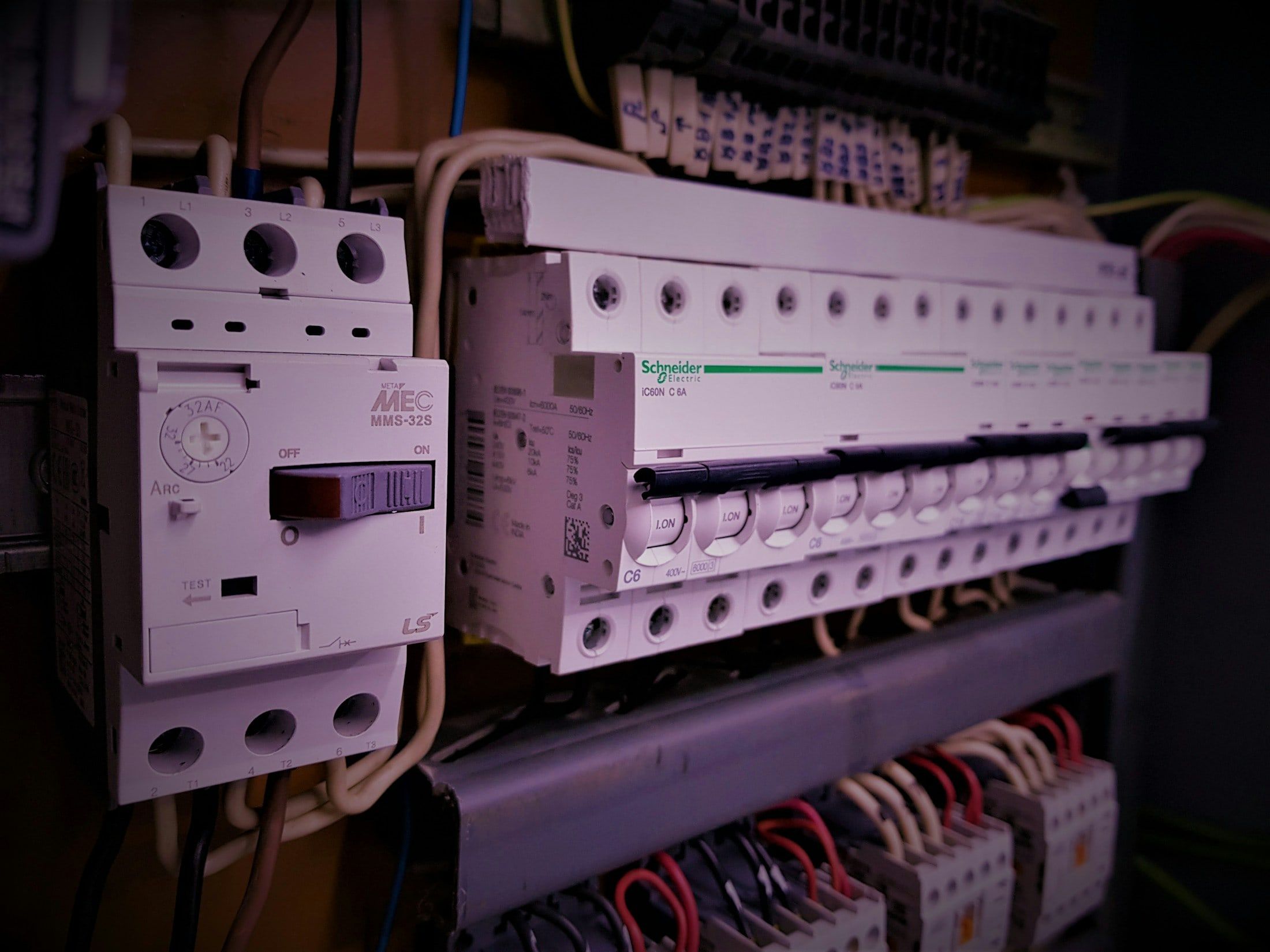
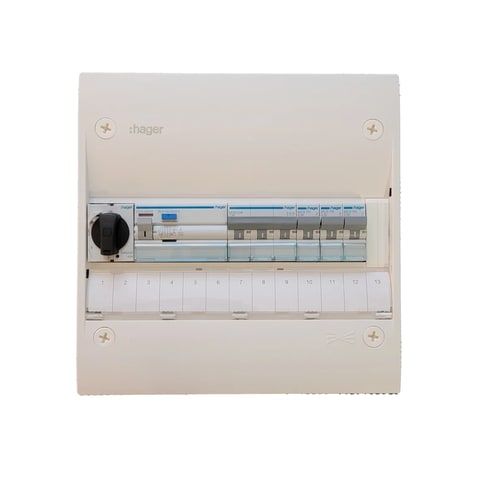
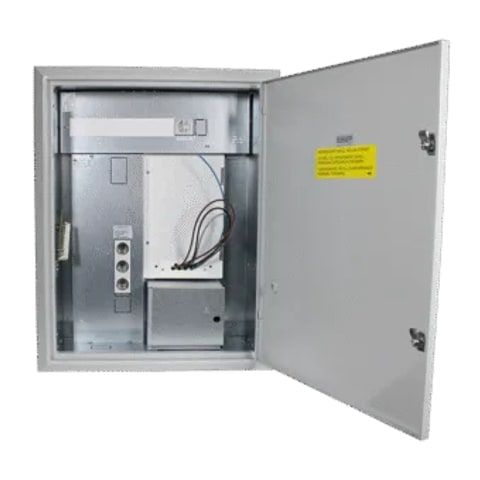
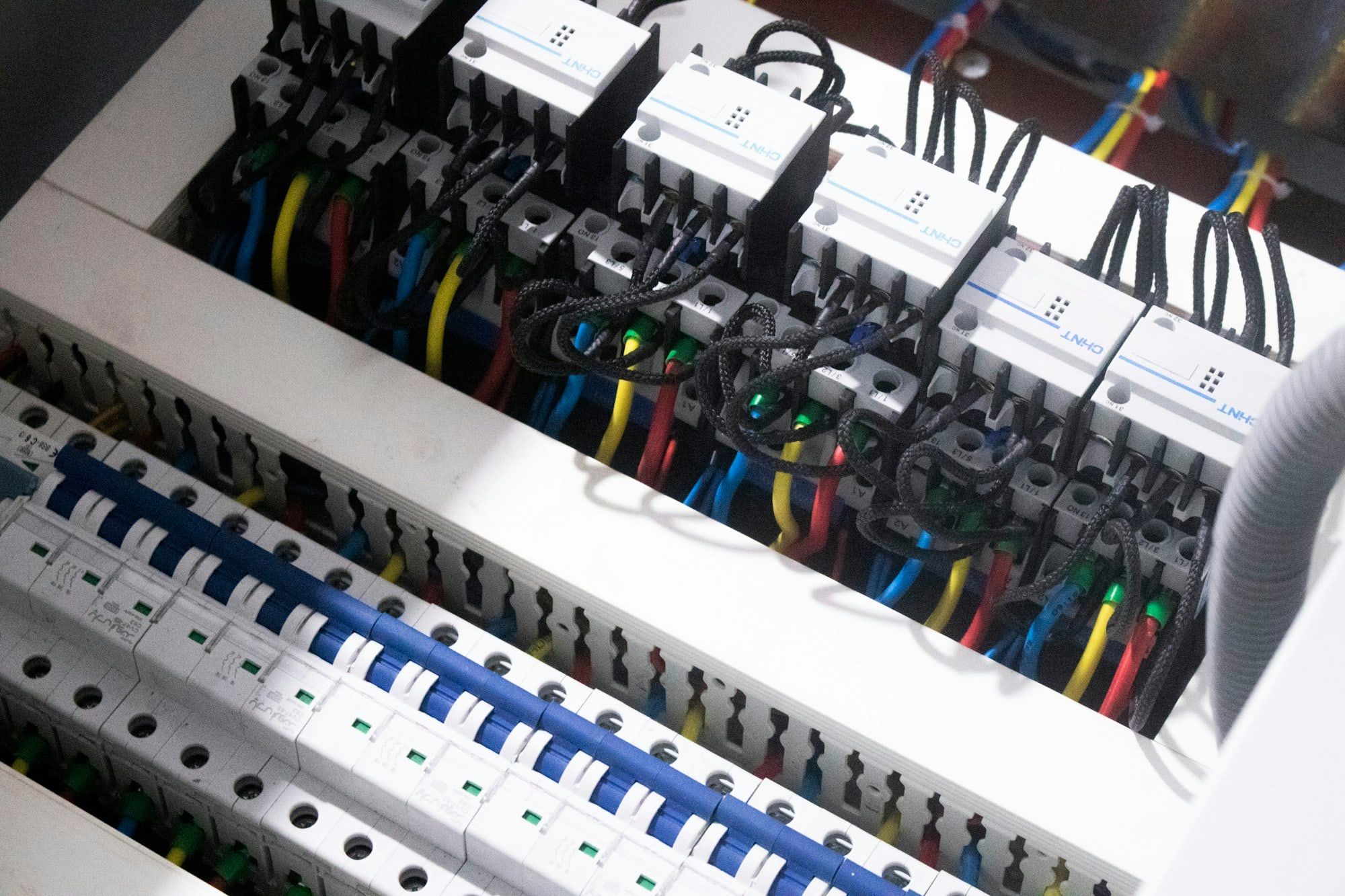
Three different protective devices can cut the power, and they tell you different things. Look in the consumer unit before you do anything else.
| What has tripped | What it points to | What you do |
|---|---|---|
| A screw-in fuse or a circuit breaker | Overload or a fault on that particular circuit | Follow the steps further down |
| The residual current device (RCD) | Current is leaking to earth somewhere in the installation | Fault-find as described in the article on the RCD |
| The main fuse | The home is using more electricity at once than the fuse is made for | Switch off large loads and get help |
You can often tell a blown screw-in fuse by the coloured disc in the middle, which has come loose. A circuit breaker that has tripped has its lever down. The RCD cuts the power when current leaks to earth, and it has a test button. How to fault-find it is described in the article on when the RCD trips.
According to Elsäkerhetsverket’s page on the consumer unit, there must be an up-to-date circuit chart by the unit, a list of what each fuse supplies. You need it now. If it is missing, an electrical installation company (elinstallationsföretag) can draw one up.
Too many appliances on the same circuit
A fuse can carry a certain current. You work out how much power that corresponds to by multiplying the current by the voltage, 230 V. The colours of the screw-in fuses are the ones Elsäkerhetsverket gives.
| Fuse | Colour of the screw-in fuse | The circuit can carry roughly |
|---|---|---|
| 6 A | Green | 1,380 W |
| 10 A | Red | 2,300 W |
| 16 A | Grey | 3,680 W |
The power is stated on the appliance’s rating plate. A 2,000 W kettle and a 1,000 W toaster together draw 3,000 W. That is more than a 10 A circuit can carry, and the fuse will trip if both are on for long enough.
You can recognise overload by three things:
- The fuse holds when little is running and trips when several things are used at the same time.
- It happens on the same occasions, for example when the washing machine is heating water while the tumble dryer is running.
- The fuse does not trip straight away. A slightly overloaded fuse can hold for several minutes before it trips.
The solution is to move an appliance to a socket on another circuit, or not to run everything at once. A multi-way extension lead does not give you more electricity, only more holes. On its page about safe electricity indoors, Elsäkerhetsverket advises you to avoid many multi-way extension leads in a row, because that can cause overload.
Fault-find in this order
This is something you may do yourself. You may replace a blown screw-in fuse and reset a circuit breaker that has tripped, and anything that is plugged into a socket you may unplug and plug back in.
- Read the circuit chart. Find out which sockets and lights belong to the fuse.
- Unplug everything on the circuit. Switch off the lights and pull out every plug, including anything on standby.
- Replace the screw-in fuse or switch the circuit breaker back on. A new screw-in fuse must have the same rated current as the old one.
- Wait a while. If the fuse trips again even though nothing is connected, the fault is probably in the fixed installation. Stop and leave the circuit switched off.
- Plug in one appliance at a time. Wait a few minutes between each one.
- Note when it happens. If the fuse trips as soon as a particular appliance is plugged in, it is probably the appliance that is faulty. If it only trips when several are running, the circuit is overloaded.
The cooker, the water heater and underfloor heating are often permanently connected (hard-wired) and cannot be unplugged. Switch them off with their own switch or thermostat. Disconnecting permanently connected equipment is electrical installation work and not something you may do yourself.
What you should not do
- Never fit a larger screw-in fuse. In its instructions on replacing a blown screw-in fuse, Elsäkerhetsverket writes that the new one must have the same rated current. The fuse is chosen to match what the wiring can carry.
- Do not switch the circuit breaker back on time after time. You may switch it on again, but Elsäkerhetsverket writes that the fault should be put right first.
- Do not keep using an appliance that makes the fuse trip. It is a sign of an electrical fault in the appliance.
- Do not repair anything in the fixed installation. Mending wiring, boxes and whatever sits behind the cover of the consumer unit is electrical installation work.
Signs that you should stop straight away
A few things mean that the fault-finding is over as far as you are concerned:
- there is a smell of burning at the consumer unit, a socket or an appliance
- the fuse carriers, that is, the porcelain holders the screw-in fuses sit in, are too hot to touch
- a socket or a cable is discoloured or cracked
- plugs sit loosely in the socket
- the fuse trips even though everything is unplugged.
Elsäkerhetsverket’s regulations say that faults that may be an immediate danger must be put right at once, or else that part of the installation must be taken out of use. In practice this means that the screw-in fuse should be unscrewed or the circuit breaker switched off until the fault has been found. We go through more signs in the article on warning signs of electrical faults.
When the main fuse blows
The main fuse sits before the electricity meter and decides how much electricity the whole home can use at once. If it blows, the home as a whole has drawn too much, often on one of the phases (the live conductors). Kraftringen Nät writes on its page about the fuse-based fee (säkringsavgift) that main fuses that trip often may be a sign that you need a larger fuse.
A larger fuse is not always the answer. Sometimes it is enough to move a large load to another phase, and for an EV charger (wallbox) there is load balancing, which lowers the charging power when the house is drawing a lot. What applies when the fuse is to be replaced with a larger one is described in the article on raising the main fuse.
What it costs to get help
Fault-finding has no fixed price in our price list, because nobody knows in advance how long it will take to find the fault. Fault-finding alone does not qualify for the Swedish ROT tax deduction for labour on your home (ROT-avdrag) either, according to the Swedish Tax Agency, Skatteverket.
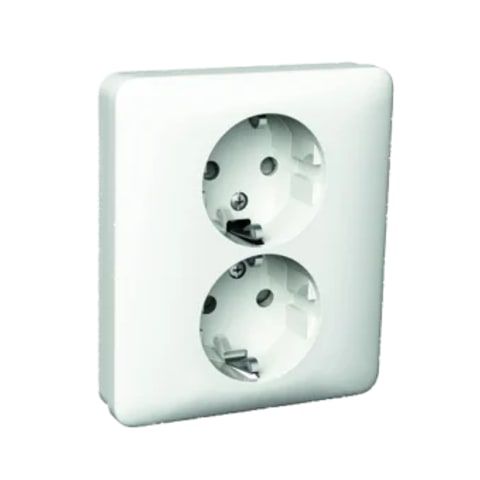
If the problem is overload, the solution may be more sockets, so that the appliances can be spread out. A new installation of a flush-mounted double socket costs SEK 1,720, or SEK 1,333 with ROT. Two sockets for a washing machine and a tumble dryer cost SEK 2,694, or SEK 2,148 with ROT. The prices include materials, installation, VAT and up to 7 metres of cable. A travel charge of SEK 500 is added, and the prices apply to a standard installation. If the socket is to have a circuit of its own from the consumer unit, the price depends on the distance and on whether there is room in the unit, and then we give you a quote.
When it is time to get in touch
Get in touch when the fuse trips with everything unplugged, when something smells of burning or is hot, or when the same circuit keeps tripping even though you have spread out the appliances. We then track down the fault and put it right. How that is done is described on the page about fault-finding and service, and the prices of new sockets are in the price list for sockets.
Sources
- Elsäkerhetsverket – Checklist for checking your electrical installation (in Swedish)
- Elsäkerhetsverket – The consumer unit (in Swedish)
- Elsäkerhetsverket – Replacing a blown screw-in fuse (in Swedish)
- Elsäkerhetsverket – What electrical work may I do myself? (in Swedish)
- Elsäkerhetsverket – Safe electricity indoors (in Swedish)
- Elsäkerhetsverket – ELSÄK-FS 2022:3 on the holder's checks (in Swedish)
- Kraftringen Nät – Fuse-based fee (in Swedish)
- Skatteverket – Does the work qualify for the ROT deduction? (in Swedish)